For many Americans — especially those living in and around Philadelphia, Pennsylvania — the decision to fix major dental issues often comes down to two competing concerns: cost and quality. Advanced dental treatments like implants, crowns, bridges, and full-mouth reconstructions routinely cost thousands of dollars in the United States. Dental insurance often covers only the basics, leaving patients to absorb hefty bills for restorative or cosmetic procedures.
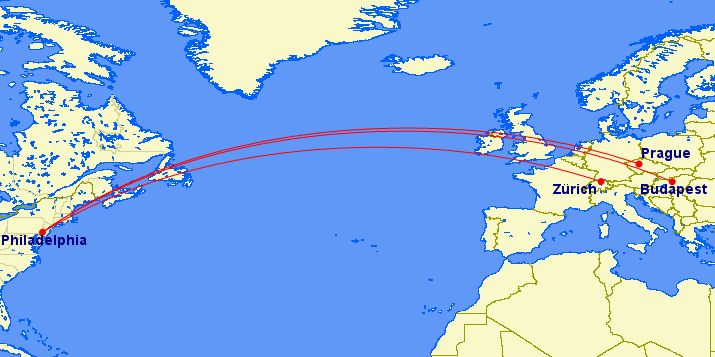
Dental tourism has emerged as a compelling alternative for cost-conscious patients willing to travel abroad for high-quality, affordable oral healthcare. Traditionally, destinations like Mexico and Turkey have dominated the dental tourism conversation for Americans. But a major development in **2026 — the launch of daily direct flights from Philadelphia (PHL) to Budapest, Hungary (BUD) — has shifted the calculus for many East Coast patients. With this new route, Budapest moves from a distant option to a practical and attractive destination for dental care abroad.
This expert review explains in depth how that direct flight connection enhances the value proposition of Budapest for dental tourism, exploring clinical quality, cost comparisons, travel logistics, aftercare considerations, and the overall patient experience.
Why Dental Tourism Matters for US Patients
The high cost of dental care in the United States has motivated many Americans to seek treatment abroad. Advanced procedures such as dental implants and full-mouth restorations can cost $3,000–$5,500 per implant or much more in private practices in the U.S., often totaling tens of thousands of dollars for comprehensive treatment plans.
Meanwhile, many international dental tourism destinations offer comparable care at a fraction of the local cost — even when adding travel and accommodation expenses. Until recently, however, convenience and travel logistics remained barriers for many Americans. Direct flights to dental tourism hubs were rare, meaning long travel times with layovers and higher associated costs. That is changing with the Philadelphia–Budapest link.
Budapest’s Dental Tourism Reputation
Before discussing travel, it’s important to understand why Budapest is such a strong destination for dental work in the first place.
Budapest — and Hungary more broadly — has long been recognized as one of Europe’s leading dental tourism markets. Clinics in the city have decades of experience treating international patients, particularly those from Western Europe, the UK, Canada, and increasingly the United States. Hungarian dental professionals are well trained, often educated or certified through European programs, and clinics adhere to rigorous hygiene and safety standards under European Union healthcare regulations.
Patients routinely report that Hungarian clinics use modern diagnostic tools (such as 3D imaging and CAD/CAM prosthetic design), advanced treatment protocols, and high-quality implant materials comparable to what would be used in U.S. practices.
Cost savings in Budapest are substantial. Across a range of dental procedures — from implants to crowns and veneers — patients can save 40–70% or more compared with typical U.S. prices, even after factoring in flights and hotels.
What the Philadelphia–Budapest Direct Flight Means
1. Easier Travel Is a Gamechanger
Travel logistics are a real consideration for patients contemplating dental tourism. Prior to 2026, U.S. patients traveling to Budapest had to endure at least one layover, often more, extending total travel time and increasing complexity. That changed with the announcement that American Airlines will operate daily nonstop flights from Philadelphia to Budapest starting in May 2026.
This new connection significantly reduces travel time from the East Coast to Central Europe — typically to around eight-plus hours nonstop, compared with longer journeys with stops.
For dental tourism patients, this improvement matters for several reasons:
-
Reduced fatigue and stress. Dental treatments often require calmness, focus, and good physical condition. Long journeys with multiple stops can increase jet lag and discomfort, especially for older adults or those with anxiety about flying.
-
Better coordination of appointments. With easier flight scheduling, dental clinics and patients can plan consultations, surgical procedures, and follow-up visits more reliably without optimizing around complicated travel itineraries.
-
More flexibility. Daily scheduled flights mean patients can select travel dates that fit their treatment timelines rather than being constrained by limited or indirect flights.
2. Better Access Means More Patients Can Consider Budapest
The proximity of a nonstop flight from Philadelphia transforms Budapest from an abstract option into a tangible choice for many Americans. This is especially true for people who might otherwise rule out overseas dental care due to travel anxiety or uncertainty around logistics.
Residents of Pennsylvania, New Jersey, Delaware, Maryland, and even parts of New York now have a direct gateway to world-class dentistry in Central Europe without stepping outside a convenient flight path from the Philadelphia metro area.
3. Better Travel Logistics Enhance Treatment Planning
Many advanced dental treatments — such as implants, bone grafting, and full-mouth restorations — are multi-stage processes. These often require an initial consultation, surgery, healing time, and then restorative procedures like crowns or bridges.
With direct flights, patients can more easily:
-
Plan multiple short trips spaced over the required healing intervals.
-
Return for follow-ups if necessary with minimal travel stress.
-
Schedule all steps efficiently, improving overall outcomes.
This can be especially important for complex dental work where precise timing between visits enhances healing and final results.
Clinical Quality and Standards in Budapest
As noted earlier, the dental care offered in Budapest is supported by decades of experience treating international patients and by compliance with EU healthcare standards. Clinics in the city routinely feature high-end technology such as digital imaging, precision milling for crowns and implants, and state-of-the-art sterilization protocols.
Many dentists are multilingual and experienced with foreign patients’ expectations regarding communication, transparency, and care coordination. This level of communication is especially valuable for American patients who may be navigating treatment options, timelines, and aftercare planning in a foreign setting.
Cost Advantages for Philadelphia Residents
A key driver of dental tourism is cost savings, and Budapest’s dental costs are often dramatically lower than U.S. rates.
For example, typical price ranges for common modern treatments in Hungarian clinics — including many in Budapest — can be as follows:
-
Dental implant per tooth: €700–€1,100
-
Zirconium Crown: €300–€450
-
Porcelain Veneer: €320–€480
(All approximations based on regional averages and Hungarian pricing data from 2025 estimates).
Even with the added cost of flights, hotels, and meals, American patients often find the overall cost dramatically lower than what they would pay locally. That’s true for single treatments and especially full-mouth restorations or multi-implant plans.
Compared with prices that can be typical in the Philadelphia area, savings can be transformative for patients who need significant restorative work but lack sufficient insurance coverage.
Why Budapest Is Clinically and Culturally Appealing
A few additional reasons that make Budapest especially attractive for dental tourism include:
English-Friendly Clinics and Support
Most dental clinics catering to international patients have English-speaking dentists and coordinators, making communication smooth from consultation through aftercare. Clear communication is crucial to treatment success and patient confidence.
Modern Facilities and Technology
Budapest dental clinics frequently invest in high-end diagnostic tools (like 3D scanning and CAD/CAM lab capabilities), enabling precise planning and shorter turnaround times for prosthetics.
Cultural and Recovery Experience
Budapest isn’t just a clinical destination — it’s a vibrant, historic European capital known for its architecture, thermal baths, museums, and culinary scene. For many patients, dental travel doubles as a restorative trip, allowing them to combine healthcare with travel experiences that aid relaxation and recovery.
Aftercare and Follow-Up: What Patients Need to Know
Aftercare is a vital component of successful dental treatment — especially for procedures like implants that require healing and possible adjustments.
One concern many international patients have is how to manage aftercare once they return home. With the Philadelphia–Budapest route now operating year-round, patients have a direct path to return to their treating dentist for follow-ups if needed. This reduces concerns about coordination and continuity of care that may have been prohibitive in the past.
Cost-Benefit Perspective for Philadelphia Patients
When you factor in the cost of advanced dental care in the U.S., travel expenses, and overall patient experience, the decision to pursue treatment in Budapest becomes clearer:
Costs in the U.S.
Advanced procedures in the Philadelphia region can be prohibitively expensive, especially when insurance coverage is limited. Even basic restorative work often costs several thousand dollars per tooth in private practices.
Costs in Budapest
Budapest’s prices for the same procedures — even including travel — often result in substantial savings. Those savings can make life-changing dental treatments accessible to patients who might otherwise postpone care due to cost.
Conclusion: A New Era for East Coast Dental Patients
For dental patients living around Philadelphia, the introduction of daily direct flights to Budapest represents a meaningful shift. It removes a significant travel barrier, making highly affordable and high-quality dental care in Central Europe a practical choice.
With modern clinics, EU-level safety standards, experienced English-speaking professionals, and major cost savings, Budapest stands out as one of the most compelling destinations for dental tourism from the U.S. The new nonstop flight doesn’t just improve logistics — it opens the door to better planning, better patient experience, and better dental care outcomes for thousands of Americans.
For many people who have delayed treatment due to cost or travel concerns, this connectivity could be the reason they finally achieve the smile and oral health they deserve — without sacrificing quality or financial peace of mind.