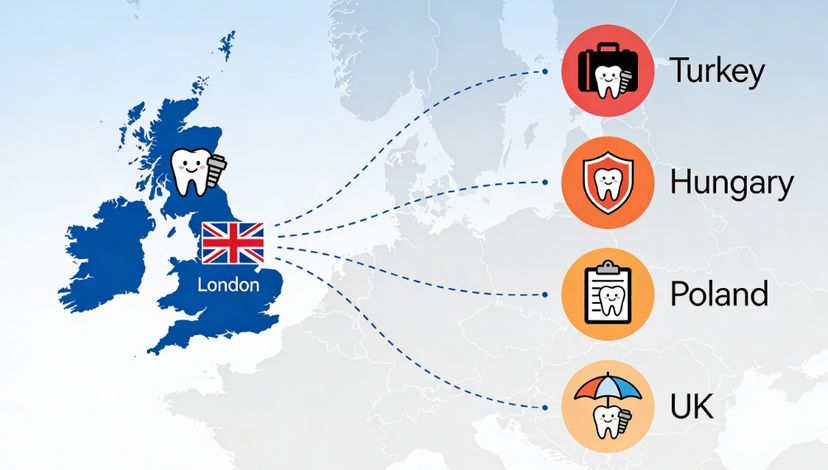
Full mouth dental implants abroad have become one of the most sought‑after solutions for UK patients who need a complete smile restoration but cannot justify private prices at home. Turkey, Poland, Hungary and Croatia all compete for this growing demand, offering package deals that combine advanced implant dentistry with organised travel support.
What “full mouth dental implant packages” really include
Full mouth dental implants usually refer to fixed full‑arch restorations such as All‑on‑4 or All‑on‑6, where a bridge is anchored on four or more implants per jaw. Instead of placing an implant for every missing tooth, the dentist uses strategic implant positions and a reinforced bridge to restore an entire arch.
Typical packages for UK patients tend to include:
-
Initial consultation and treatment planning with digital X‑rays or 3D CT scans
-
Surgical placement of implants (usually 4–6 per arch) under local anaesthetic and/or sedation
-
Temporary fixed teeth or an immediate bridge, where clinically suitable
-
Final full‑arch bridge (often zirconia or metal‑ceramic) fitted after the healing period
-
Hotel accommodation and airport transfers for one or both visits
-
English‑speaking coordinators and aftercare instructions tailored for international travellers
The main reasons UK patients look at these packages are the price difference, the speed of treatment and the ability to combine dentistry with a short break in a new destination.
Cost comparison: Turkey, Poland, Hungary and Croatia
Full mouth implants remain a major investment wherever you go, but the gap between UK and international prices is substantial. While a single full arch can easily exceed £12,000–£15,000 in a UK private clinic, similar All‑on‑4 style treatments abroad often cost a fraction of that.
Typical All‑on‑4 / full‑arch price ranges per jaw for international clinics serving UK patients (indicative ranges, excluding flights):
| Destination | Typical per‑arch range | Package style | Key pricing notes |
|---|---|---|---|
| Turkey | ~£3,000–£5,000 per jaw | Often “all‑inclusive” with hotel and transfers | Among the lowest prices in Europe, sometimes using mixed implant brands and acrylic bridges |
| Hungary | ~£3,000–£5,000 per jaw in many clinics; higher in premium centres | Structured packages with exams, imaging, transfers | EU‑regulated clinics, strong implantology tradition and a focus on long‑term materials |
| Croatia | ~£5,500–£8,000 per jaw in many published offers | Coastal and city‑break packages, often with 4‑star hotels | Prices mid‑range within Europe, with emphasis on coastal recovery stays |
| Poland | ~£5,000–£7,500 per jaw for All‑on‑4 in major cities | Packages with prosthesis, airport pick‑ups and local support | Competitive pricing with premium implant brands and warranties |
For a full mouth restoration (both arches), UK patients can often save many thousands of pounds by travelling, even after accounting for flights, hotels and repeat visits.
Turkey: aggressive pricing and fast cosmetic makeovers
Turkey has built a global reputation for dental tourism, including full mouth implant work and fast cosmetic transformations. Istanbul and Antalya, in particular, host large clinics designed almost exclusively for international patients.
Key points for Turkey:
-
Very low per‑arch prices for All‑on‑4 compared with UK rates, often around a third or less of British fees.
-
Highly polished patient experience with modern clinics, multilingual staff and dedicated coordinators.
-
Frequent direct flights from the UK and flexible scheduling, which suits busy professionals.
-
Many clinics promote “teeth in a day” or immediate‑load protocols where temporary fixed bridges are fitted shortly after surgery, subject to bone quality.
On the other hand, the very rapid turnaround and strong marketing can sometimes blur the line between ideal clinical timing and what looks attractive in an advertisement. Some of the cheapest offers rely on lower‑cost materials (such as acrylic bridges) and may not include every potential follow‑up or complication in the quoted fee. Patients therefore need to examine treatment plans, implant brands, guarantees and aftercare policies carefully before committing.
Hungary: long‑standing implant hub within the EU
Hungary has been a favourite dental tourism destination for UK and Irish patients since the 1990s, with Budapest widely recognised as a central hub for implantology and complex restorative dentistry. Prices are lower than UK private treatment but tend to reflect an emphasis on long‑term quality and regulated healthcare standards rather than ultra‑budget offers.
Distinctive strengths of Hungary for full mouth implants include:
-
EU regulation and hygiene standards, which often reassure patients who prefer treatment inside the European Union.
-
A strong pool of implantologists and prosthodontists experienced in full‑arch and full‑mouth cases.
-
Common use of recognised premium implant systems and advanced diagnostics such as 3D CT imaging as part of the implant planning process.
-
Structured treatment protocols, often using a two‑stage approach with a healing period before the final bridge, or carefully selected immediate‑load options where appropriate.
Many Hungarian clinics offer full‑mouth packages where the first visit focuses on extractions, implant placement and temporary solutions, while the second visit several months later is reserved for the final zirconia or metal‑ceramic bridgework. This approach allows bone and soft tissues to heal before finalising the bite and aesthetics, which can be particularly beneficial in complex cases.
Croatia: coastal recovery and growing reputation
Croatia has developed a strong name among UK and Irish patients, especially those drawn to the idea of combining treatment with a stay on the Adriatic coast. The country benefits from EU membership and modern private dental centres, many of which specialise in implantology and full‑arch rehabilitation.
Features that appeal to patients choosing Croatia include:
-
Clinic locations in coastal towns and cities, allowing recovery near the sea.
-
Full mouth implant packages with mid‑range European pricing, often including hotels and transport.
-
Use of well‑known implant brands and digital planning tools.
Potential limitations can include more limited direct flight options outside the main holiday season and, in some regions, fewer English‑speaking staff once you step outside the clinic or capital city. For patients who time their visits around good flight connections and prefer a relaxed coastal environment, Croatia can be a very attractive compromise between cost, setting and clinical standards.
Poland: value, reliability and city‑break convenience
Poland has become one of Europe’s most popular destinations for general medical tourism, and dental implants are a significant part of that demand. Cities such as Warsaw, Kraków, Gdańsk and Wrocław host clinics geared to international patients, with modern equipment and English‑speaking teams.
For full mouth implant packages, Poland typically offers:
-
Competitive All‑on‑4 pricing per arch, often slightly above Turkey but still well below UK levels.
-
Emphasis on recognised implant brands, comprehensive prosthetic work and written warranties.
-
City‑break style trips with reasonably priced hotels, clear local transport and straightforward navigation for first‑time visitors.
Poland may not have the same “low‑cost holiday” branding as Turkey, but it often appeals to UK patients looking for a balance of regulated European care, transparent communication and solid technical dentistry.
Treatment timelines and number of visits
Regardless of the country chosen, full mouth implants are not typically a single‑visit procedure if you are aiming for long‑term, healthy results. Most reputable clinics organise treatment over two or more trips.
A common pathway looks like this:
-
Remote assessment – You send recent X‑rays or arrange an initial online consultation, then receive a preliminary plan and quotation.
-
First visit (5–10 days) – Detailed diagnostics, extractions if needed, implant surgery and immediate temporary teeth (fixed or removable) depending on bone quality and occlusion.
-
Healing phase (3–6 months) – Implants integrate with the bone while you return to the UK, using a temporary solution in the meantime.
-
Second visit (5–10 days) – Final impressions, bite adjustments and fitting of the permanent full‑arch bridges, usually followed by check‑ups and occlusal fine‑tuning.
Timeframes can be shortened if the case is straightforward and bone quality is excellent, but responsible clinics are cautious not to rush the transition to the final prosthesis. When comparing packages, it is important to confirm how many visits are included, what happens if extra appointments are needed, and whether temporary solutions are fixed or removable.
Safety, materials and clinical standards
For UK patients, the biggest concern about travelling abroad for full mouth implants is not only the surgery itself but the long‑term reliability of the work. When assessing packages in Turkey, Poland, Hungary or Croatia, a few technical points can make a real difference.
Important questions to address with any clinic:
-
Implant systems used – Are they recognised global brands with parts available in the UK if future work is required?
-
Bridge materials – Are full‑arch restorations acrylic, metal‑ceramic or monolithic zirconia, and what is the expected lifespan of each option?
-
Diagnostic tools – Is 3D CT imaging used as standard for planning, and are digital workflows available for more precise prosthetics?
-
Sedation and anaesthesia – What forms of sedation are available for anxious patients, and who monitors them?
-
Infection control and accreditation – Does the clinic hold recognised certifications, and are hygiene protocols transparent and documented?
Well‑established centres in all four countries increasingly follow international guidelines for implant surgery and can demonstrate high success rates for full‑arch restorations. Patients should request written treatment plans, warranties and clear terms regarding complications or revision work.
Travel logistics and aftercare for UK patients
Travel planning is a crucial part of any full mouth implant journey. While all four countries are reachable from the UK, some are more convenient than others depending on your local airport, preferred airlines and time of year.
Points to consider for UK travellers:
-
Flight frequency and duration – Turkey offers plentiful flights from major UK airports, while Hungary, Poland and Croatia are well linked to London and key regional hubs.
-
Local transfers and accommodation – Many clinics bundle hotel stays and airport pick‑ups, which simplifies logistics and reduces stress during recovery.
-
Follow‑up options in the UK – Some clinics collaborate with UK partners or provide guidance if minor adjustments are needed after you return home.
-
Visit timing – Implant surgery is generally followed by several days of mild discomfort and swelling; scheduling a relaxed itinerary rather than intensive sightseeing helps healing.
For complex treatments, it is worth asking how the clinic supports remote follow‑up (for example, via video consultations) and what happens if you experience a problem after your return.
Choosing the right country for your full mouth implants
No single destination is perfect for every patient, and the best choice depends on your priorities: budget, clinical philosophy, travel style and your own medical background. Turkey tends to suit patients with tight budgets who prioritise speed and “all‑inclusive” packages; Hungary often attracts those who prefer EU‑regulated dentistry with a strong track record in implantology; Croatia appeals to patients who enjoy a coastal environment and mid‑range pricing; and Poland is ideal for those who prefer a city‑break feel combined with robust clinical standards.
Whichever country you choose, focusing on the expertise of your implant team, the quality of materials and the clarity of the proposed treatment plan will do far more for your long‑term oral health than choosing purely on price. For UK patients facing high private fees at home, a carefully selected full mouth dental implant package abroad can deliver a stable bite, natural‑looking aesthetics and a long‑lasting solution—provided the decision is made with the same thoroughness you would expect from the dentistry itself.
Last Updated on April 23, 2026 by LaPorta