Dentistry has evolved dramatically across the globe, yet the differences between how it’s practiced in the United States and in Europe remain striking. From treatment costs and technology standards to education, cultural attitudes, and patient experience, both regions offer distinct advantages and challenges. Understanding these differences is essential for patients considering dental tourism, practitioners exploring international partnerships, and anyone interested in how global healthcare models shape oral health outcomes.
This comparison explores the core contrasts—economic, educational, clinical, and cultural—that define dentistry on both sides of the Atlantic.
The Cost Divide: Why Prices Are So Different
The most visible difference between American and European dentistry is cost. In the United States, dental care is among the most expensive in the world. A complex root canal with a crown can easily exceed $2,000 to $3,000, while dental implants often range from $3,000 to $6,000 per tooth. In contrast, the same procedures in many European countries typically cost 40–70% less, without sacrificing quality.
Several key factors drive this difference:
-
Healthcare structure: The U.S. operates a predominantly private healthcare system. Most dental practices are independent businesses that must manage high operational costs—staffing, insurance, licensing fees, and compliance requirements. In Europe, many clinics operate within hybrid systems supported by public health frameworks or lower overhead costs.
-
Insurance and reimbursement: American dental insurance typically covers only basic services—cleanings, fillings, and extractions—up to an annual cap (often around $1,500). Major procedures are largely out-of-pocket. In many European countries, public or semi-public systems offer partial coverage even for complex treatments, reducing patient expenses.
-
Education debt and practitioner costs: U.S. dentists frequently graduate with over $300,000 in student loans, which influences treatment pricing. European dental education tends to be government-subsidized, easing financial pressure on practitioners and enabling more affordable pricing models.
-
Regulatory environment: Strict liability laws and malpractice insurance in the U.S. increase overhead. European regulations promote high clinical standards but generally operate with lower insurance premiums and litigation risk.
This cost divide is one of the primary reasons patients look abroad for dental care—especially for implantology, full-mouth rehabilitation, and cosmetic procedures.
Training and Education: Paths to Professional Certification
While dentistry in both the U.S. and Europe demands rigorous academic preparation, the paths differ in structure and scope.
In the United States, aspiring dentists must complete:
-
A pre-dental bachelor’s degree with a science foundation.
-
Four years of dental school (Doctor of Dental Surgery or Doctor of Dental Medicine).
-
Licensing through the National Board Dental Examinations and state-specific clinical tests.
Continuing education is mandatory, and many practitioners pursue specialization through additional post-graduate residencies.
In Europe, dental training typically begins earlier. In most countries, students enter dental programs directly after secondary school and complete 5 to 6 years of integrated study leading to a degree recognized across the European Union under EU directive 2005/36/EC. The ECTS (European Credit Transfer and Accumulation System) and harmonized curricula foster professional mobility between EU states.
Key differences emerge in practical training intensity. U.S. programs emphasize clinical experience within academic institutions, often using advanced simulation labs. European schools vary; Northern and Western European programs tend to mirror U.S. standards, while universities in Central and Eastern Europe often offer extensive patient exposure early in the curriculum, which is highly valued by international students.
Both systems consistently produce competent and highly trained dentists, though the European model’s affordability attracts many American students seeking lower tuition and international experience.
Clinical Technology and Materials
In terms of clinical technology, the U.S. leads the world in early adoption of cutting-edge tools. Digital dentistry—such as 3D imaging, CAD/CAM crowns, and laser-assisted surgeries—became mainstream in American practices before many of these innovations reached wide European use.
However, this gap has narrowed rapidly. Across Europe, clinics increasingly employ intraoral scanners, guided implant systems, CBCT imaging, and same-day prosthetic fabrication. Dental tourism hubs like Hungary, Poland, and Spain have heavily invested in technology to meet international patient expectations.
Interestingly, European clinics often deliver the same technological quality at a fraction of U.S. prices due to lower equipment taxation, reduced labor costs, and broader access to European-manufactured restorative materials. For example, a zirconium crown fabricated in Budapest might be produced with identical equipment and materials used in a San Francisco dental lab, but cost 60% less after all overheads are accounted for.
Treatment Quality and Clinical Outcomes
Quality comparisons must balance perception and data. U.S. dentistry has a global reputation for precision, aesthetic sophistication, and innovation. Yet, European clinics—particularly in Sweden, Germany, Switzerland, and Hungary—achieve equally excellent clinical results, often ranking highly in patient satisfaction and longevity of restorations.
European quality assurance is reinforced by:
-
EU-wide regulations on clinical hygiene and material safety.
-
Standardized accreditation overseen by health ministries.
-
Strong culture of preventive care integrated into public health policy.
While the U.S. system incentivizes advanced technology and provider competition, it can also create disparities: patients without dental insurance often delay or skip treatments. In contrast, Europe’s broader access to routine care maintains overall population oral health at a more even level.
In high-level restorative and cosmetic dentistry, the difference lies less in quality and more in philosophy: American practices lean toward a “celebrity aesthetic” style—perfectly white, symmetrical, highly polished smiles—whereas European aesthetics tend to favor natural proportions, subtle shading, and conservative intervention.
Patient Experience: Service Models and Cultural Expectations
American dentistry often mirrors the customer-service ethos of the broader U.S. healthcare market. Practices focus on convenience and comfort: online booking, extended hours, sedation options, and luxurious clinic designs. Patients expect fast results, minimal downtime, and concierge-style attention.
European dental experiences differ by region:
-
Western Europe (Germany, Switzerland, Netherlands): Prioritizes precision, punctuality, and professionalism; less emphasis on cosmetic extras.
-
Southern Europe (Spain, Italy, Portugal): Combines medical expertise with personalized warmth and open communication.
-
Central and Eastern Europe (Hungary, Poland, Romania): Known for efficient, results-oriented service, often within modern clinical environments tailored for international patients.
Dental tourism has encouraged European clinics to enhance patient experience, offering treatment packages that include accommodation, airport transfers, and translation services—all integrated into comprehensive care plans. This patient-centered approach rivals or even exceeds the perceived value in U.S. private practices.
Preventive Care and Public Health Systems
In America, preventive dentistry is often marketed through private insurance plans. Regular checkups, fluoride treatments, and professional cleanings form the foundation of care for those who can afford them. However, unequal access remains a challenge: millions of Americans lack dental coverage entirely, leading to delayed treatments and avoidable oral health issues.
In Europe, prevention is institutionalized. Many countries offer free or subsidized dental check-ups for children and adolescents through public education systems. Scandinavia, in particular, is internationally recognized for incorporating preventive care into public health initiatives, resulting in lower rates of untreated decay and gum disease across populations.
Overall, European public systems produce healthier long-term outcomes at lower per-capita costs. The U.S. excels in specialized care, while Europe emphasizes accessible prevention.
Regulation, Safety, and Standards
Both the U.S. and Europe maintain strict regulatory frameworks to ensure dental safety, but their approaches differ.
In the U.S., the American Dental Association (ADA), Food and Drug Administration (FDA), and state dental boards enforce standards for materials, sterilization, and practice conduct. Inspections and compliance requirements are rigorous, but vary by state.
In Europe, the European Dental Council, national dental chambers, and EU-specific directives define uniform safety benchmarks. The CE Mark ensures all materials conform to EU safety standards, and clinics must comply with ISO-certified sterilization protocols. While public oversight may be less litigious than in the United States, regulatory enforcement remains strong and transparent.
Interestingly, for dental tourists, these shared EU regulations translate to reliability—whether you’re visiting a clinic in Hungary or Portugal, the same material safety standards apply.
Insurance and Payment Models
Insurance plays a pivotal role in shaping how patients perceive and access dental care.
-
U.S. insurance model: Predominantly employer-based or individual plans with fixed annual coverage limits. High deductibles and exclusions for major prosthetic work often leave patients financing advanced treatments themselves. This limitation fuels outbound dental tourism.
-
European model: Many countries offer mixed systems combining public insurance (covering basic treatments) with optional private insurance for cosmetic or extensive restorative work. In Germany, for instance, public insurance covers standard composite fillings, but patients can opt for premium materials with partial reimbursement.
Payment structures in Europe also differ. Clinics often provide transparent, itemized quotes upfront—facilitating trust and simplifying cross-border care arrangements. In the U.S., variable billing and insurer negotiations can make true costs less predictable until after treatment.
Cosmetic Dentistry: Different Styles, Same Goals
Both regions drive the global market for cosmetic dental services—veneers, whitening, aligners, and smile makeovers—but cultural preferences shape results.
American cosmetic dentistry pioneered the global “Hollywood smile,” emphasizing flawless alignment and brightness. Clinics utilize advanced whitening systems, minimal-prep veneers, and digital mock-up technology to achieve photogenic perfection.
European dentistry typically favors subtlety. Dentists value functional integrity as much as esthetics, following philosophies such as “biomimetic dentistry,” which preserves as much natural structure as possible. Patients in cities like Zurich, Copenhagen, or Vienna often request conservative improvements—natural enamel tones and proportional harmony—over dramatic transformations.
Dental tourists seeking a balance between beauty and affordability frequently find the European approach more closely aligned with their expectations.
Dental Tourism: Europe’s Competitive Advantage
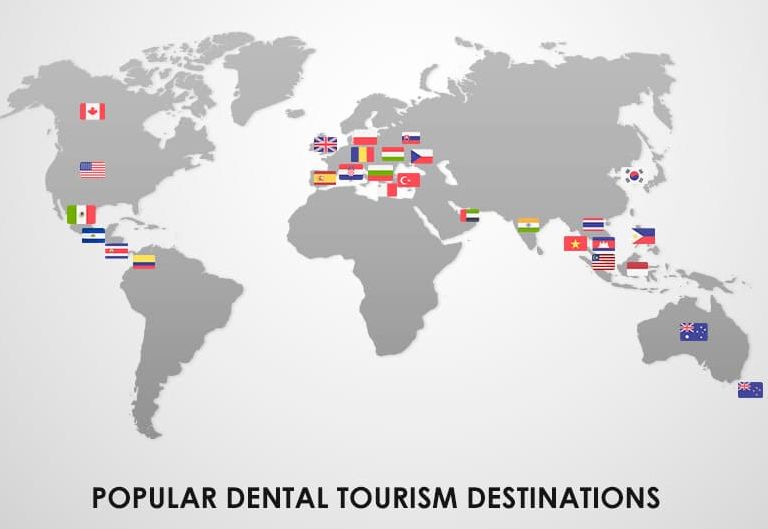
Europe has become the world’s premier destination for dental tourism, particularly Central and Eastern European countries such as Hungary, Poland, Croatia, and Romania. Budapest, often called the “dental capital of Europe,” treats hundreds of thousands of international patients each year.
Why do so many Americans and Western Europeans travel east for dental care?
-
Massive cost savings without compromising quality.
-
Standardized regulations under EU law guaranteeing material safety and qualified dentists.
-
Short travel distances and medical tourist infrastructure (airport pickups, hotels, translators).
-
High English proficiency among dental teams trained to treat international patients.
-
Combining care with tourism, making recovery part of a cultural experience.
In practical terms, a full-mouth restoration costing over $40,000 in the United States may cost $12,000–$15,000 in Hungary or Poland, even with flights and accommodations included.
For patients, these differences are life-changing: affordable access to long-term dental health, delivered with the same precision and technology they might expect at home.
Innovation and Research Collaboration
The United States and Europe both lead global dental innovation but in different ways.
U.S. research often thrives through private-sector partnerships with dental manufacturers and universities. The result: rapid commercialization of new materials, such as nanocomposite resins and next-generation implant surfaces.
Europe, by contrast, emphasizes collaborative, cross-country research such as the EU Horizon and Erasmus+ programs that fund public-university projects on dental materials, biomimetics, and digital workflows. This cooperation creates more standardized protocols and facilitates shared data across borders.
Globally, many U.S. companies license technologies tested and refined in Europe, and vice versa. The synergy between the two continents continues to shape future trends—from AI-driven diagnostic imaging to biocompatible implant coatings.
Environmental and Ethical Dimensions
Sustainability and ethics have become new frontiers in global health care, and dentistry is no exception.
European clinics increasingly adopt eco-dentistry practices—digital impressions to eliminate plastic waste, mercury-free fillings, and biodegradable sterilization materials. Regulations encourage clinics to reduce emission footprints and manage waste responsibly.
In the United States, interest in green dentistry is growing, but progress is slower due to higher costs and less regulatory pressure. Ethical dentistry—ensuring transparency in pricing, consent, and material sourcing—is widely practiced across both regions, yet publicly supported initiatives are more common in Europe.
For patients prioritizing sustainability and corporate responsibility, European clinics often present a stronger alignment with those values.
Cultural Attitudes Toward Oral Health
Culture shapes not only dental aesthetics but preventive behavior.
American culture places high social importance on a perfect smile—white, straight, and uniform teeth often symbolize professionalism and success. As a result, orthodontics and whitening are mainstream even among teenagers.
Europe’s dental culture is subtler. Oral health is viewed through a lens of functionality and balance rather than cosmetic perfection. In many countries, orthodontics are used for medical necessity more than aesthetic pursuit. This cultural divergence partly explains the difference in demand for cosmetic dentist services.
However, globalization is narrowing the gap. Young Europeans increasingly aspire to the polished “American smile,” while American patients seek more natural, personalized aesthetics inspired by European trends.
The Future of Transatlantic Dentistry
Dentistry in both the United States and Europe is advancing toward convergence. Technologies, materials, and professional standards are increasingly shared, yet economic and cultural differences remain.
Emerging trends shaping the next decade include:
-
AI-driven diagnostics improving early detection of caries and soft-tissue pathologies.
-
3D bioprinting for bone grafts and tissue regeneration.
-
Tele-dentistry connecting practitioners and patients virtually.
-
Cross-border credential recognition, easing professional mobility.
-
Personalized preventive care supported by genetic and microbiome research.
As these trends expand, patients will enjoy greater access, transparency, and precision worldwide—whether they choose treatment in Los Angeles or Lisbon.
Conclusion: Two Systems, One Goal
Dentistry in the USA and Europe may differ in structure, pricing, and cultural focus, but both share a single mission: preserving oral health through clinical excellence.
The United States stands out for innovation, patient comfort, and cosmetic artistry.
Europe leads in affordability, accessibility, and preventive care integration.
For the growing community of dental tourists, this contrast has opened new frontiers in global healthcare—where transatlantic collaboration, not competition, defines the future of dentistry.