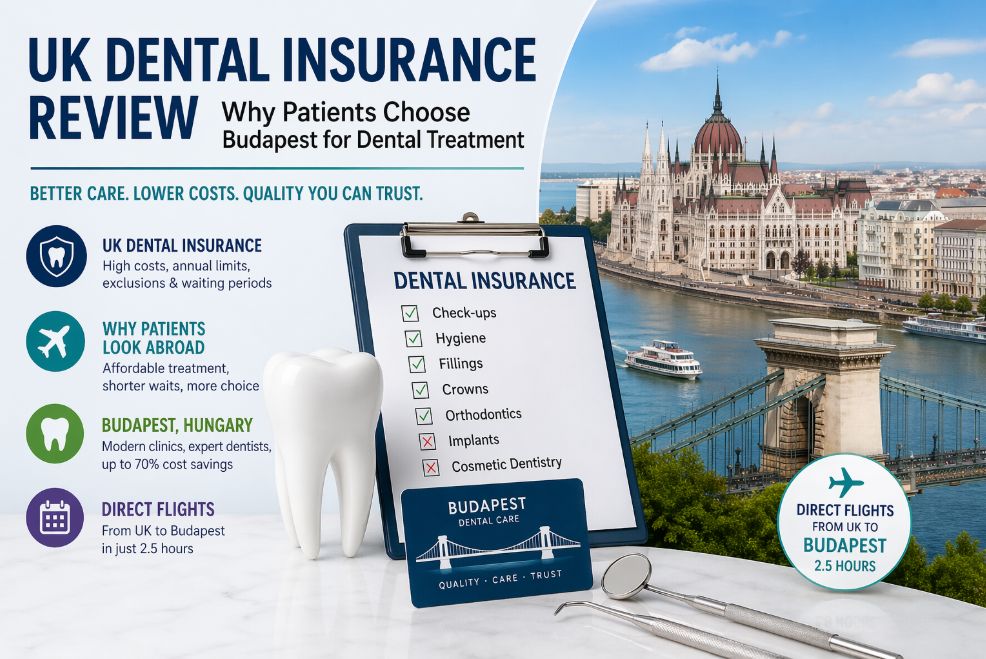
Dental care in the United Kingdom occupies a complicated space between public provision and private necessity. For many patients, dental insurance appears to offer reassurance against high costs and long waiting times. Yet in practice, the experience can be mixed, shaped by coverage limits, exclusions, and the reality of accessing timely treatment. From the perspective of dental tourism, these gaps have become increasingly visible, encouraging patients to consider alternatives beyond the UK. This review explores the major UK dental insurance providers, their strengths and weaknesses, and explains why destinations such as Budapest, Hungary have become highly attractive for British patients.
Understanding the UK Dental Insurance Landscape
Dental insurance in the UK typically operates differently from general health insurance. Most policies are designed as cash plans rather than comprehensive coverage. This means patients often pay for treatment upfront and then claim back a percentage of the cost, subject to annual limits. Unlike systems in some other countries, full coverage for major procedures is rare.
The main providers include Denplan, Bupa Dental Insurance, Simplyhealth, WPA, and a number of smaller insurers. Each has its own structure, pricing tiers, and approach to reimbursement.
Denplan: Structured but Restrictive
Denplan is one of the most recognised names in UK dental insurance. It operates on a membership model linked directly to participating dentists. Patients pay a monthly fee based on their oral health assessment, and in return receive routine care and some preventive treatments.
The appeal of Denplan lies in its predictability. Patients know what they will pay each month, and routine check-ups and hygiene visits are usually included. Emergency cover, even when travelling abroad, is also a notable feature.
However, Denplan’s limitations become apparent when complex procedures are required. Treatments such as implants, cosmetic dentistry, or advanced restorative work are often excluded or only partially covered. Additionally, patients must use a Denplan-registered dentist, limiting flexibility. If a patient wishes to switch clinics or seek specialist care elsewhere, coverage may not follow.
From a dental tourism perspective, Denplan users frequently discover that their plan does not meaningfully reduce the cost of high-value procedures. This can make overseas treatment financially attractive even when insurance is in place.
Bupa Dental Insurance: Brand Strength with Coverage Gaps
Bupa is a major healthcare brand in the UK, and its dental insurance products benefit from strong recognition and a wide network of clinics. Policies typically reimburse a percentage of treatment costs, with different tiers offering varying levels of coverage.
One advantage of Bupa Dental Insurance is access to its own dental centres, which can simplify booking and continuity of care. Preventive treatments are usually well covered, and higher-tier plans include some contribution toward major procedures.
Despite this, Bupa policies are still subject to annual maximums, which can be relatively low compared to the cost of complex treatments. For example, a patient needing multiple implants or full-mouth rehabilitation may find that their insurance covers only a small portion of the total expense.
Waiting periods are another consideration. Many policies require patients to wait several months before claiming for major work, which can delay necessary treatment. This is particularly frustrating for patients experiencing pain or functional issues.
For these reasons, even Bupa-insured patients often explore international options when facing significant dental bills.
Simplyhealth: Flexible but Limited in Scope
Simplyhealth offers dental cash plans rather than traditional insurance. These plans are relatively affordable and easy to understand. Patients receive a fixed percentage back on treatments such as check-ups, fillings, and crowns, up to an annual limit.
The simplicity of Simplyhealth is appealing, especially for those seeking support with routine care. There is no need to stay within a specific network of dentists, which provides flexibility.
However, the limitations are clear when looking at high-cost procedures. Annual caps are typically modest, meaning that reimbursement covers only a fraction of major treatment costs. Cosmetic procedures are generally excluded, and orthodontics may have strict limits.
In practice, Simplyhealth works best as a supplementary plan rather than a comprehensive solution. Patients requiring extensive work often find that the plan does little to offset the financial burden.
WPA Dental Insurance: Customisation with Caveats
WPA offers dental insurance as part of its broader health insurance portfolio. Its plans are more customisable than many competitors, allowing patients to tailor coverage to their needs.
This flexibility can be advantageous for those who want a more personalised approach. Some plans include higher annual limits and better coverage for restorative treatments compared to basic cash plans.
However, premiums can be significantly higher, particularly for comprehensive cover. As with other providers, exclusions remain an issue. Pre-existing conditions, cosmetic procedures, and certain specialist treatments may not be covered.
WPA’s approach suits patients willing to invest in more robust insurance, but it still does not fully eliminate out-of-pocket costs for major dental work.
Other Providers and Emerging Options
Smaller insurers and newer entrants to the market often focus on affordability and simplicity. These plans are typically cash-based, offering modest reimbursements for routine care.
While they can be useful for maintaining oral health, they rarely address the needs of patients requiring advanced procedures. As a result, their role in preventing dental tourism is minimal.
Key Strengths Across UK Dental Insurance
Across the board, UK dental insurance offers several clear benefits. Preventive care is usually well supported, encouraging regular check-ups and early intervention. This can help reduce the likelihood of more serious problems developing.
Monthly payment structures also make budgeting easier. Patients can spread the cost of routine care rather than paying large sums upfront.
Additionally, some plans include emergency cover abroad, which provides peace of mind for travellers.
Common Weaknesses and Patient Frustrations
Despite these strengths, several recurring issues shape patient experiences. Annual limits are perhaps the most significant constraint. Even higher-tier plans often cap payouts at levels far below the cost of complex treatments like full arch reconstructions or All-on-4 implants.
Exclusions are another major concern. Cosmetic dentistry, implants, and advanced restorative procedures are frequently not covered, or only partially reimbursed.
Waiting periods can delay access to care, particularly for new policyholders. Network restrictions, in the case of plans like Denplan, can limit patient choice.
Administrative processes, including claims and reimbursements, can also be time-consuming. Patients must often pay upfront and wait for partial reimbursement, which can strain finances.
Why Dental Insurance Limitations Drive Patients Abroad
The limitations of UK dental insurance play a direct role in the growth of dental tourism. When patients discover that their policies do not adequately cover major procedures, they begin to explore alternatives. High costs, combined with limited reimbursement, create a strong financial incentive to look beyond the UK. Waiting times for NHS treatment and the high fees associated with private care further amplify this effect. As a result, patients seek destinations where they can access high-quality treatment at a fraction of the price, often with shorter waiting times and more comprehensive care packages. This shift is not simply about cost savings; it is also about gaining control over treatment timelines and accessing advanced procedures that may be financially out of reach at home.
Budapest, Hungary: A Leading Destination for UK Patients
Budapest has emerged as one of the most prominent dental tourism hubs in Europe. Its reputation is built on a combination of clinical expertise, modern facilities, and competitive pricing.
One of the key advantages is accessibility. Direct flights from multiple UK cities to Budapest are frequent and relatively short, typically taking around two and a half hours. This makes it feasible for patients to travel for consultations, procedures, and follow-up visits without significant disruption.
Hungarian dental clinics often invest heavily in technology and training. Many dentists have international experience and speak fluent English, which helps build trust with UK patients.
Cost savings are substantial. Procedures such as implants, crowns, and full-mouth restorations can be significantly less expensive than in the UK, even when travel and accommodation are included. For patients facing limited insurance coverage, this difference can be decisive.
Another important factor is the patient experience. Many clinics in Budapest offer comprehensive packages that include airport transfers, accommodation assistance, and personalised treatment plans. This level of service can feel more streamlined and attentive compared to the fragmented experience some patients encounter in the UK.
Comparing Value: Insurance vs. Overseas Treatment
When evaluating dental insurance against dental tourism, the distinction often comes down to value. Insurance provides partial financial support and encourages preventive care, but it rarely eliminates the cost barrier for major procedures.
In contrast, dental tourism offers a more direct reduction in treatment costs. Even without insurance reimbursement, the total expense can be lower than what patients would pay in the UK after claiming.
This does not mean that insurance is without value. It remains useful for routine care and minor treatments. However, for significant dental work, its limitations become clear.
Considerations for Patients Exploring Dental Tourism
Patients considering treatment abroad should approach the decision carefully. Research is essential, including verifying clinic credentials, reading patient reviews, and understanding the full treatment plan.
Travel logistics, including accommodation and recovery time, should also be factored in. While Budapest is easily accessible, patients undergoing complex procedures may need to stay for several days or return for follow-up visits.
Communication is another key consideration. Reputable clinics will provide clear, detailed information in English and maintain ongoing contact with patients before and after treatment.
The Future of Dental Care Choices in the UK
The interplay between dental insurance and dental tourism reflects broader trends in healthcare. Patients are increasingly informed and willing to explore international options when domestic systems do not meet their needs.
For UK insurers, this presents both a challenge and an opportunity. Expanding coverage for major procedures, increasing annual limits, and improving transparency could help retain patients.
For dental tourism destinations like Budapest, the focus remains on maintaining high standards, clear communication, and a seamless patient experience.
Final Thoughts
UK dental insurance plays an important role in supporting routine oral health, but its limitations are difficult to ignore. Annual caps, exclusions, and partial reimbursements often leave patients facing significant out-of-pocket costs for major treatments.
As a result, dental tourism has become a practical and increasingly popular alternative. Budapest, with its combination of accessibility, expertise, and affordability, stands out as a leading choice for UK patients.
The decision ultimately depends on individual circumstances, but the trend is clear. When insurance falls short, patients look for solutions that offer both quality and value, even if that means travelling beyond their home country.
Last Updated on April 27, 2026 by LaPorta