Dental tourism has moved from a niche option to a mainstream healthcare choice for many UK patients. Rising treatment costs, long waiting times, and limited insurance coverage at home have encouraged people to explore high-quality care abroad. Among the many destinations available, Budapest has established itself as one of Europe’s most trusted and consistent hubs for dental treatment. At the same time, countries like Turkey have gained visibility through aggressive marketing and lower entry prices.
Understanding the differences between these destinations is essential for patients who want safe, predictable, and long-lasting results. This review takes a detailed look at dental tourism, the role of Budapest, and why many UK patients ultimately prefer Hungary over Turkey when making a decision that affects both health and finances.
What Is Dental Tourism and Why It Is Growing
Dental tourism refers to travelling abroad to receive dental care, often combining treatment with a short stay or holiday. While the concept has existed for decades, it has grown rapidly in recent years due to several converging factors.
In the UK, private dental care can be expensive, particularly for advanced procedures such as implants, crowns, bridges, and full-mouth restorations. NHS dentistry, while more affordable, often involves waiting lists and limited availability for complex treatments. Dental insurance, as many patients discover, rarely covers the full cost of major procedures.
This gap between need and affordability has created a strong incentive to look overseas. Patients are no longer simply seeking lower prices; they are also looking for modern clinics, experienced dentists, and efficient treatment timelines.
Why Budapest Became a Dental Tourism Leader
Budapest did not become a dental tourism hub by accident. Its position is the result of decades of investment, training, and international patient care.
Hungary has a long-standing reputation for excellence in dentistry. The country produces a high number of qualified dentists, many of whom train or gain experience internationally before returning to practice. Clinics in Budapest are known for adopting modern technologies early, including digital imaging, CAD/CAM systems, and advanced implant techniques.
Another defining factor is the city’s focus on international patients. Many clinics are specifically structured to serve visitors from the UK, Ireland, and Western Europe. English-speaking staff, clear treatment plans, and transparent pricing are standard rather than optional.
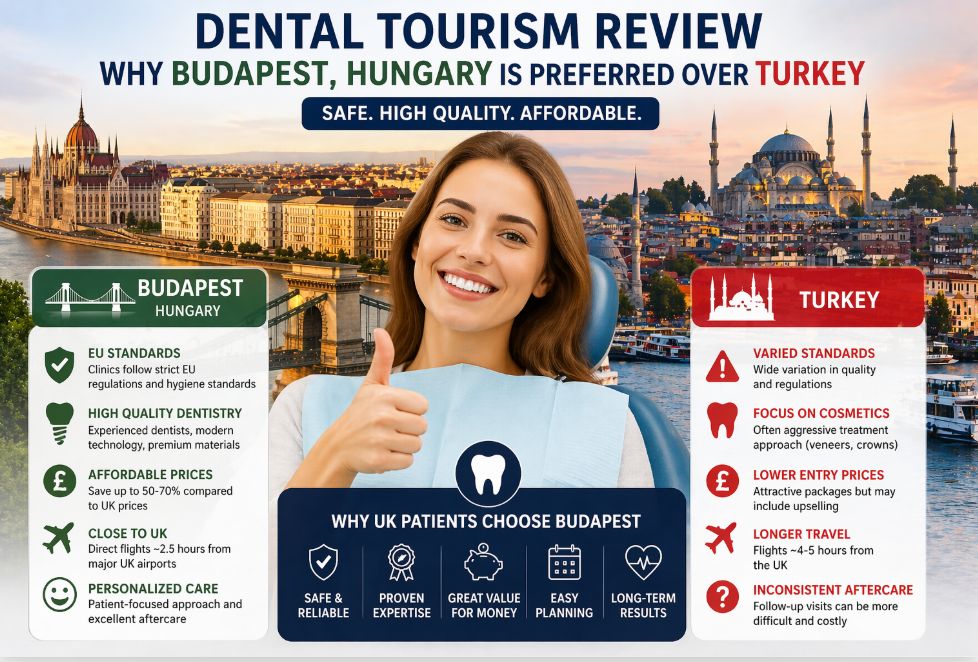
Accessibility also plays a major role. Direct flights from multiple UK airports to Budapest take approximately two and a half hours, making travel straightforward and manageable even for patients undergoing multiple visits.
Cost Advantages Without Compromising Quality
One of the most compelling reasons patients choose Budapest is cost efficiency. Dental procedures in Hungary can be significantly less expensive than in the UK, often by 50 to 70 percent depending on the treatment.
This difference is not due to lower standards, but rather to economic factors such as lower operating costs, wages, and overheads. Clinics are able to invest in high-quality materials and equipment while still offering competitive pricing.
For example, treatments like dental implants, zirconia crowns, and full-mouth restorations are commonly performed in Budapest at a fraction of UK prices. Even after factoring in flights and accommodation, the total cost remains attractive.
Importantly, patients are not forced to compromise on quality. Many clinics use internationally recognised implant systems and adhere to strict sterilisation and safety protocols.
The Patient Experience in Budapest
Dental tourism is not only about treatment outcomes but also about the overall experience. In this regard, Budapest has refined its approach to meet the expectations of international patients.
Clinics often provide comprehensive service packages. These may include airport transfers, assistance with accommodation, and personalised treatment schedules. The goal is to reduce stress and create a seamless experience from arrival to departure.
Consultations are typically thorough, with detailed diagnostics and clear explanations of treatment options. Patients are given time to consider their choices rather than being pressured into immediate decisions.
Follow-up care is another area where Budapest clinics perform well. Many maintain ongoing communication with patients after they return to the UK, offering guidance and support as needed.
The Rise of Turkey in Dental Tourism
Turkey has become one of the most visible players in dental tourism, particularly through online advertising and social media. Cities such as Istanbul and Antalya are frequently promoted as destinations for cosmetic dental treatments.
Turkey’s appeal is largely based on price and speed. Clinics often advertise very low-cost packages, particularly for veneers and smile makeovers. Short treatment timelines are also a major selling point, with some procedures completed in just a few days.
For patients seeking immediate aesthetic improvements, this model can be attractive. However, it also raises important questions about long-term outcomes and clinical approaches.
Key Differences Between Budapest and Turkey
While both destinations offer cost savings, the similarities largely end there. The differences lie in clinical philosophy, regulation, and patient care standards.
Approach to Treatment
Budapest clinics tend to prioritise conservative and restorative dentistry. The focus is on preserving natural tooth structure wherever possible and using implants or crowns only when clinically necessary.
In contrast, some clinics in Turkey are known for aggressive cosmetic treatments, particularly the widespread use of veneers or crowns on otherwise healthy teeth. This approach can deliver quick visual results but may not always align with long-term oral health.
Regulation and Standards
Hungary operates within the European Union framework, which provides a level of regulatory consistency and patient protection. Clinics must adhere to EU standards for healthcare, hygiene, and professional qualifications.
Turkey, while home to many reputable clinics, operates under a different regulatory system. Standards can vary more widely between providers, making careful research essential.
Continuity of Care
Budapest’s proximity to the UK makes follow-up visits more practical. Patients can return easily if adjustments or additional treatment are required.
Travelling to Turkey is typically longer and may involve more complex logistics. This can make follow-up care less convenient, particularly if unexpected issues arise.
Transparency and Communication
Clinics in Budapest generally emphasise clear communication and detailed treatment planning. Patients receive comprehensive information about procedures, costs, and timelines.
In Turkey, experiences can vary. While many clinics provide excellent service, others may focus more heavily on marketing than on detailed consultation.
Why UK Patients Often Prefer Budapest
For UK patients, the decision often comes down to trust, predictability, and long-term value. Budapest offers a balance that is difficult to replicate elsewhere.
The combination of high clinical standards, transparent pricing, and accessible travel creates a sense of reliability. Patients know what to expect and can plan their treatment with confidence.
There is also a cultural alignment that helps build trust. Hungarian clinics have been treating UK patients for many years, and their services are tailored to meet these expectations.
In contrast, while Turkey offers attractive prices, the variability in approach and outcomes can create uncertainty. For patients undergoing significant procedures, this uncertainty can outweigh the initial cost savings.
Safety and Risk Considerations
Any medical treatment carries some level of risk, and dental tourism is no exception. Choosing the right destination and clinic is critical.
Budapest’s established reputation provides a level of reassurance. Many clinics have extensive experience with international patients and can demonstrate consistent results.
Patients considering Turkey should be particularly diligent in researching clinics, verifying credentials, and understanding the full scope of treatment. Low prices should not be the sole deciding factor.
The Role of Technology and Expertise
Budapest clinics are known for integrating advanced technology into their workflows. Digital diagnostics, 3D imaging, and computer-guided implant placement are commonly used to improve accuracy and outcomes.
Dentists often specialise in specific areas, such as implantology or prosthodontics, ensuring a high level of expertise for complex cases.
While Turkey also has modern clinics, the level of consistency across providers can vary. Some clinics match or exceed international standards, while others may not.
Travel and Convenience for UK Patients
Travel logistics are an important consideration in dental tourism. Budapest’s central European location makes it highly accessible from the UK.
Flights are frequent, affordable, and relatively short. This allows patients to schedule treatment in stages without significant disruption to their lives.
Accommodation options in Budapest are also diverse, ranging from budget-friendly apartments to high-end hotels. The city itself offers a welcoming environment, which can make the treatment journey more comfortable.
Turkey, while still accessible, typically involves longer flights and potentially more complex travel arrangements. For some patients, this adds an extra layer of inconvenience.
Long-Term Value vs Short-Term Savings
When comparing Budapest and Turkey, it is important to consider not just the initial cost but the long-term value of treatment.
Budapest’s emphasis on quality, planning, and follow-up care supports durable results. Patients are less likely to require corrective procedures, which can be costly and time-consuming.
In Turkey, lower upfront prices can be appealing, but the long-term outcome depends heavily on the clinic chosen. In some cases, patients may require additional treatment later, which can offset initial savings.
Making an Informed Decision
Dental tourism offers real opportunities for UK patients, but it requires careful decision-making. Budapest stands out as a destination that combines affordability with reliability and clinical excellence.
Turkey remains a popular option, particularly for cosmetic treatments, but it demands a higher level of scrutiny from patients.
Ultimately, the choice depends on individual priorities. Those seeking a balance of quality, safety, and value often find that Budapest provides the most consistent and reassuring option.
Final Thoughts
Dental tourism continues to reshape how UK patients approach oral healthcare. As costs rise and expectations evolve, travelling abroad has become a practical solution rather than an exception.
Budapest has earned its position as a leading destination through a combination of expertise, transparency, and patient-focused care. While Turkey offers competitive pricing and strong marketing, the differences in approach and consistency are significant.
For patients making decisions about complex and often life-changing dental treatments, these differences matter. Budapest’s track record, accessibility, and commitment to quality continue to make it a preferred choice for those seeking dependable results and genuine value.
Last Updated on April 22, 2026 by LaPorta