Dental crowns are one of the most reliable restorative treatments available, helping protect damaged teeth while restoring their strength, appearance, and function. Whether you’ve recently received a crown or are considering one, a common question is: How long do dental crowns last?
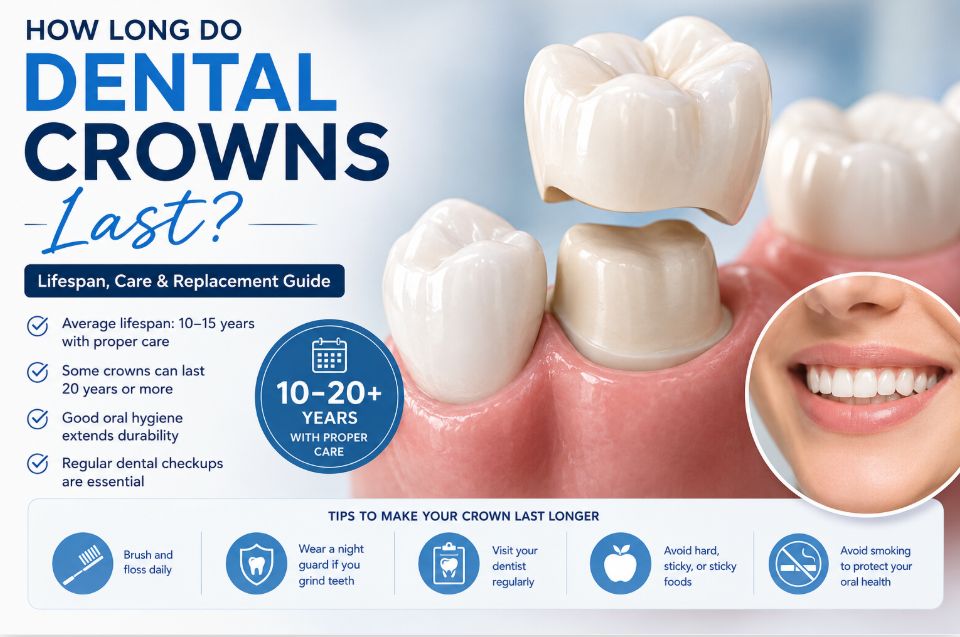
The answer depends on several factors, including the type of crown, your oral hygiene habits, and how well you care for your teeth. While most dental crowns last 10 to 15 years, many can remain in excellent condition for 20 years or longer with proper maintenance.
This guide explains what affects a crown’s lifespan, how to extend its durability, and when it’s time to consider a replacement.
What Is a Dental Crown?
A dental crown is a custom-made cap that completely covers a damaged or weakened tooth. It restores the tooth’s shape, size, strength, and appearance while protecting it from further damage.
Dentists commonly recommend crowns for:
- Protecting a tooth after a root canal
- Restoring a large cavity that cannot support a filling
- Repairing cracked or fractured teeth
- Covering severely worn teeth
- Supporting a dental bridge
- Completing a dental implant
- Improving the appearance of discolored or misshapen teeth
Because crowns are permanently cemented into place, they function much like natural teeth.
Average Lifespan of Different Types of Dental Crowns
Not all crowns are made from the same materials, and each offers different levels of durability and aesthetics.
| Crown Material | Average Lifespan | Best For |
|---|---|---|
| Porcelain | 10–15 years | Front teeth with a natural appearance |
| Porcelain-Fused-to-Metal (PFM) | 10–15 years | Balance of strength and aesthetics |
| Zirconia | 15–20+ years | Back teeth and patients who grind their teeth |
| Gold & Metal Alloys | 20–30+ years | Molars requiring exceptional durability |
| Resin | 5–10 years | Temporary or lower-cost restorations |
Although these figures represent averages, many patients enjoy much longer-lasting results when their crowns are properly maintained.
What Affects the Lifespan of a Dental Crown?
Several factors influence how long a crown will remain functional.
Material Quality
High-strength materials like zirconia and gold alloys generally last longer than resin or traditional porcelain.
Oral Hygiene
Brushing twice daily, flossing around the crown, and scheduling regular dental cleanings help prevent decay and gum disease that can compromise the supporting tooth.
Teeth Grinding (Bruxism)
Grinding or clenching places significant pressure on crowns, increasing the risk of fractures or loosening. Wearing a custom night guard can dramatically extend a crown’s lifespan.
Bite Alignment
An uneven bite may place excessive force on specific crowns, causing premature wear or damage.
Diet and Lifestyle
Frequently chewing ice, hard candies, popcorn kernels, or using your teeth to open packaging can damage crowns over time.
Smoking
Smoking contributes to gum disease and may reduce the longevity of both natural teeth and dental restorations.
Signs Your Dental Crown May Need Replacement
Even durable crowns eventually wear out. Contact your dentist if you notice any of the following:
- Pain when biting
- Persistent tooth sensitivity
- A loose or wobbly crown
- Visible cracks or chips
- Gum recession around the crown
- Decay at the crown’s margin
- Changes in your bite
- Bad breath or recurring inflammation around the crowned tooth
Early evaluation often prevents more serious dental problems.
How to Make Your Dental Crown Last Longer
With consistent care, many crowns exceed their expected lifespan.
Practice Excellent Oral Hygiene
Brush with fluoride toothpaste twice a day and floss carefully around the crown to remove plaque and food debris.
Visit Your Dentist Regularly
Routine examinations allow your dentist to detect minor issues before they become major problems.
Wear a Night Guard
If you grind or clench your teeth while sleeping, a professionally fitted night guard protects both your crowns and natural teeth.
Avoid Damaging Habits
Try to avoid:
- Chewing ice
- Biting fingernails
- Opening bottles or packages with your teeth
- Eating extremely hard foods frequently
Maintain a Healthy Diet
Limiting sugary foods and acidic beverages helps reduce the risk of decay developing beneath the crown.
Can a Dental Crown Last a Lifetime?
While some crowns remain functional for several decades, no dental restoration is guaranteed to last forever.
Even if the crown itself remains intact, the tooth underneath may develop decay, experience gum recession, or require additional treatment that makes replacement necessary.
Fortunately, proper oral care significantly increases the chances of keeping a crown for 20 years or more.
Common Reasons Dental Crowns Fail
Dental crowns usually fail because of problems affecting the underlying tooth rather than the crown material itself.
Common causes include:
Tooth Decay
Decay can develop where the crown meets the natural tooth, especially if plaque accumulates around the margins.
Cement Failure
Over time, the dental cement securing the crown may weaken, allowing the crown to loosen.
Physical Damage
Accidents, sports injuries, or biting hard objects can crack or fracture a crown.
Poor Fit
A crown that doesn’t fit properly may allow bacteria to enter underneath, increasing the risk of decay.
Gum Disease
Advanced periodontal disease can weaken the structures supporting the crowned tooth.
What Happens When a Crown Needs Replacing?
Replacing a dental crown is generally straightforward.
Your dentist will typically:
- Examine the crown and surrounding tooth.
- Take X-rays if necessary.
- Remove the old crown.
- Treat any decay or structural damage.
- Prepare the tooth for a new crown.
- Take digital or traditional impressions.
- Place a temporary crown if needed.
- Fit and cement the new permanent crown.
Modern digital scanning and CAD/CAM technology may even allow same-day crown replacement in some practices.
Dental Crown Maintenance Tips
Simple daily habits can maximize the life of your restoration.
- Brush twice daily with a soft-bristled toothbrush.
- Floss carefully around the crown every day.
- Use an antibacterial mouthwash if recommended.
- Attend routine dental cleanings every six months.
- Wear a mouthguard during contact sports.
- Address grinding or clenching early.
Preventive care is almost always less costly and less invasive than replacing a damaged crown.
Dental Crowns vs. Other Restorations
Understanding how crowns compare to other restorative treatments can help you make informed decisions.
Crowns vs. Fillings
Fillings repair smaller areas of decay, while crowns protect teeth with extensive damage or weakened structure.
Crowns vs. Veneers
Veneers primarily improve cosmetic appearance by covering only the front surface of the tooth. Crowns restore both function and strength by covering the entire tooth.
Crowns vs. Onlays
Onlays restore larger portions of a tooth than fillings but preserve more natural tooth structure than a full crown.
Your dentist will recommend the option that best suits your clinical needs.
Frequently Asked Questions
How often should dental crowns be replaced?
Most crowns last between 10 and 15 years, although many remain functional for 20 years or longer.
Can cavities develop under a crown?
Yes. The crown itself cannot decay, but the natural tooth underneath still can, particularly around the edges of the restoration.
Can a dental crown fall off?
Yes. Crowns may loosen if the cement fails, decay develops beneath the crown, or the tooth structure changes over time.
Are zirconia crowns more durable than porcelain?
Generally, yes. Zirconia crowns offer excellent fracture resistance while also providing an attractive appearance.
Is sensitivity normal after getting a crown?
Mild sensitivity is common for a few days after placement. Persistent or worsening discomfort should be evaluated by your dentist.
Conclusion
Dental crowns are a durable and highly effective solution for restoring damaged teeth. While the average crown lasts between 10 and 15 years, many continue functioning well for 20 years or more with excellent oral hygiene, regular dental visits, and healthy habits.
If you notice discomfort, looseness, visible damage, or changes around your crown, don’t wait for the problem to worsen. A prompt dental evaluation can often preserve the underlying tooth and extend the life of your restoration.
By taking proper care of both your crown and your natural teeth, you can enjoy a healthy, confident smile for many years to come.
Frequently Asked Questions
How long do dental crowns typically last?
Most dental crowns last between 10 and 15 years, but many can remain in good condition for 20 years or longer with proper care. The lifespan depends on factors such as the crown material, oral hygiene, and everyday habits.
Which type of dental crown lasts the longest?
Gold and metal alloy crowns are generally the most durable, often lasting 20 to 30 years or more. Zirconia crowns are also highly durable and can last 15–20+ years while offering a more natural appearance.
Can a dental crown last a lifetime?
Although it’s possible for a crown to last several decades, no dental crown is designed to last forever. Over time, normal wear, gum recession, or decay beneath the crown may require it to be replaced.
What causes a dental crown to fail?
Common causes of crown failure include tooth decay under the crown, worn dental cement, cracks or fractures, teeth grinding (bruxism), trauma, and gum disease. Regular dental checkups can help detect these problems early.
How do I know if my dental crown needs replacing?
Signs that your crown may need replacement include pain when biting, increased sensitivity, a loose crown, visible cracks or chips, receding gums around the tooth, or persistent bad breath caused by decay beneath the crown.
Can cavities develop under a dental crown?
Yes. While the crown itself cannot decay, the natural tooth underneath is still vulnerable to cavities, especially around the edge where the crown meets the tooth. Good oral hygiene is essential to prevent decay.
How can I make my dental crown last longer?
To maximize the lifespan of your crown:
- Brush twice daily with fluoride toothpaste.
- Floss around the crown every day.
- Visit your dentist regularly for checkups and cleanings.
- Avoid chewing ice and other hard objects.
- Wear a night guard if you grind your teeth.
Can a loose dental crown be repaired?
In some cases, a dentist can clean and re-cement a loose crown if both the crown and the underlying tooth are in good condition. If the crown is damaged or decay is present, replacement may be necessary.
Are zirconia crowns better than porcelain crowns?
Both materials have advantages. Zirconia crowns are stronger and more resistant to fractures, making them ideal for back teeth. Porcelain crowns offer excellent aesthetics and are often preferred for restoring front teeth where appearance is a priority.
Can I eat normally with a dental crown?
Yes. Once your permanent crown is securely placed, you can eat most foods as usual. However, it’s best to avoid biting hard items such as ice, popcorn kernels, or hard candy, as these can damage both crowns and natural teeth.
Is it normal to have sensitivity after getting a crown?
Mild sensitivity to hot or cold foods is common for a few days after a crown is placed. If sensitivity persists, worsens, or is accompanied by pain when biting, contact your dentist for an evaluation.
How often should dental crowns be checked?
Dentists recommend examining your crowns during routine dental checkups, typically every six months. Regular visits help identify wear, decay, or other issues before they become more serious.
Sources
- American Dental Association (ADA)
- MouthHealthy by the American Dental Association
- National Institute of Dental and Craniofacial Research (NIDCR)
- National Center for Biotechnology Information (NCBI)
- Cleveland Clinic
- Mayo Clinic
- Colgate Oral Health Center
- Harvard Health Publishing
Last Updated on July 27, 2026 by LaPorta