If you’ve ever experienced jaw pain, clicking when you chew, or difficulty opening your mouth, you may have wondered whether you have TMJ disorder. Temporomandibular joint (TMJ) disorders—also known as temporomandibular disorders (TMD) – are common conditions that affect the jaw joint and surrounding muscles. They can cause discomfort, interfere with daily activities, and, if left untreated, impact your quality of life.
The good news is that many cases of TMJ disorder can be managed successfully, and in some cases, prevented with healthy habits and early intervention. This guide explains what TMJ disorder is, its causes and symptoms, treatment options, and practical ways to protect your jaw health.
What Is TMJ Disorder?
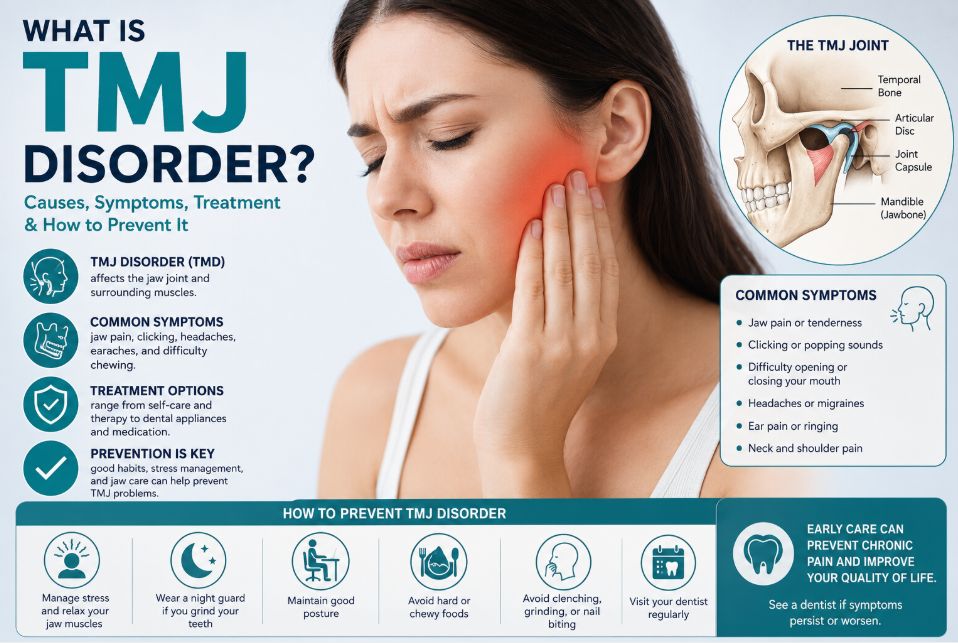
The temporomandibular joint (TMJ) is the hinge-like joint that connects your lower jaw (mandible) to the skull, just in front of each ear. You have one TMJ on each side of your face, and together they allow you to:
- Chew food
- Speak clearly
- Yawn
- Swallow
- Open and close your mouth
- Move your jaw from side to side
TMJ disorder (TMD) refers to a group of conditions affecting the jaw joints, muscles, or surrounding tissues. These disorders can cause pain, stiffness, limited jaw movement, and clicking or popping sounds during jaw motion.
Understanding the Temporomandibular Joint
The TMJ is one of the body’s most complex joints. It combines both hinge and sliding movements, allowing smooth and coordinated jaw function.
The joint consists of:
- The lower jaw (mandible)
- The temporal bone of the skull
- A small cartilage disc that cushions movement
- Ligaments that stabilize the joint
- Muscles responsible for chewing and jaw movement
When any of these structures become inflamed, injured, or overworked, TMJ symptoms may develop.
Common Causes of TMJ Disorder
There isn’t always a single cause of TMJ disorder. Often, several factors contribute to the condition.
Teeth Grinding (Bruxism)
Grinding or clenching your teeth places excessive pressure on the jaw joints and surrounding muscles, especially during sleep.
Chronic Jaw Clenching
Stress-related clenching during the day can strain the TMJ over time.
Arthritis
Osteoarthritis and rheumatoid arthritis may damage the joint surfaces, leading to pain and reduced movement.
Jaw Injury
A blow to the face or jaw can injure the joint, muscles, or cartilage disc.
Bite Problems
Although bite alignment alone is not usually the primary cause of TMJ disorders, certain bite issues may contribute in some individuals.
Stress
Emotional stress often causes muscle tension, leading to jaw clenching and increased discomfort.
Poor Posture
Forward head posture, common among people who spend long hours using computers or mobile devices, can place additional strain on the jaw and neck muscles.
Symptoms of TMJ Disorder
Symptoms vary from mild to severe and may affect one or both sides of the jaw.
Common symptoms include:
- Jaw pain or tenderness
- Pain near the ears
- Clicking or popping sounds when opening or closing the mouth
- Jaw locking
- Difficulty chewing
- Limited mouth opening
- Facial pain
- Headaches or migraines
- Neck and shoulder pain
- Ear fullness or ringing (tinnitus)
- A feeling that the bite has changed
Some people experience painless jaw clicking, which may not require treatment unless it is accompanied by pain or limited movement.
Who Is Most at Risk?
Anyone can develop TMJ disorder, but some people have a higher risk, including:
- Adults between 20 and 40 years old
- Women, who are diagnosed more often than men
- People who grind or clench their teeth
- Individuals with chronic stress or anxiety
- Patients with arthritis
- People recovering from facial or jaw injuries
How Is TMJ Disorder Diagnosed?
A dentist or healthcare provider will usually begin with a thorough examination.
Diagnosis may include:
- Reviewing your medical and dental history
- Examining jaw movement
- Feeling the jaw muscles for tenderness
- Listening for clicking or popping sounds
- Evaluating your bite
- Taking X-rays when appropriate
- Ordering CT scans or MRI if more detailed imaging is needed
Accurate diagnosis helps identify the underlying cause and guide the most effective treatment.
Treatment Options for TMJ Disorder
Many TMJ disorders improve with conservative treatment and do not require surgery.
Home Care
For mild symptoms, your dentist may recommend:
- Eating soft foods temporarily
- Applying warm or cold compresses
- Avoiding wide yawning
- Resting the jaw
- Performing gentle jaw stretching exercises
Dental Treatments
Depending on your condition, treatment may include:
- Custom-made night guards
- Occlusal splints to reduce grinding
- Bite adjustments when clinically appropriate
- Orthodontic treatment in selected cases
Medications
Your healthcare provider may recommend:
- Nonsteroidal anti-inflammatory drugs (NSAIDs)
- Pain relievers
- Muscle relaxants
- Short-term medications for severe muscle spasms
Physical Therapy
Physical therapy may improve jaw mobility through:
- Stretching exercises
- Muscle strengthening
- Massage therapy
- Posture correction
- Manual therapy techniques
Surgical Treatment
Surgery is rarely needed and is generally reserved for severe cases that do not respond to conservative care. Options may include minimally invasive procedures such as arthrocentesis or arthroscopy, with open-joint surgery considered only in selected situations.
How to Prevent TMJ Disorder
While not every case can be prevented, healthy habits can significantly reduce your risk.
Avoid Grinding and Clenching
If you grind your teeth at night, ask your dentist whether a custom night guard is appropriate.
Manage Stress
Relaxation techniques such as deep breathing, meditation, yoga, and regular exercise can reduce jaw muscle tension.
Practice Good Posture
Keep your head aligned over your shoulders, especially when working at a computer or looking at your phone.
Limit Hard and Chewy Foods
Reduce excessive chewing of:
- Ice
- Hard candy
- Tough meats
- Bagels
- Chewing gum
Don’t Use Your Teeth as Tools
Avoid opening packages, biting fingernails, or chewing on pens.
Schedule Regular Dental Visits
Routine dental examinations help identify teeth grinding, bite changes, and early signs of jaw problems before symptoms worsen.
Daily Habits That Support Jaw Health
Small changes in your daily routine can make a significant difference.
Healthy habits include:
- Keeping your teeth slightly apart when your mouth is relaxed
- Sleeping in a comfortable position that supports your neck
- Stretching your neck and jaw muscles regularly
- Staying hydrated
- Taking breaks during long conversations or meals
- Avoiding excessive gum chewing
Can TMJ Disorder Go Away on Its Own?
Some mild cases improve within a few weeks with rest, stress reduction, and avoiding activities that strain the jaw.
However, persistent or worsening symptoms should be evaluated by a dentist or healthcare professional. Early treatment often prevents chronic pain and long-term joint damage.
When Should You See a Dentist?
Seek professional evaluation if you experience:
- Jaw pain lasting more than a few weeks
- Difficulty opening or closing your mouth
- Jaw locking
- Pain while chewing
- Frequent headaches associated with jaw pain
- Swelling around the jaw
- Clicking accompanied by pain or limited movement
Prompt diagnosis allows appropriate treatment before symptoms become more severe.
Frequently Asked Questions
Can stress cause TMJ disorder?
Yes. Stress often leads to unconscious jaw clenching and teeth grinding, which can strain the jaw muscles and joints.
Is jaw clicking always a sign of TMJ disorder?
Not necessarily. Many people have painless jaw clicking without any underlying disorder. Clicking accompanied by pain, locking, or limited movement should be evaluated.
Does TMJ disorder cause headaches?
Yes. Muscle tension around the jaw can trigger headaches, facial pain, and even migraine-like symptoms in some people.
Can braces fix TMJ disorder?
Orthodontic treatment may help in selected cases where bite alignment contributes to symptoms, but braces are not a universal treatment for TMJ disorders.
Is surgery usually necessary?
No. Most people improve with conservative treatments such as self-care, physical therapy, stress management, and oral appliances.
What foods should I avoid if I have TMJ disorder?
Choose softer foods during flare-ups and avoid chewing hard candies, ice, nuts, crusty bread, chewy meats, and gum until symptoms improve.
Conclusion
TMJ disorder is a common condition that affects the jaw joints and muscles responsible for chewing, speaking, and other everyday movements. Symptoms such as jaw pain, clicking, headaches, and difficulty opening the mouth can range from mild to severe, but many cases respond well to conservative treatment.
Maintaining good posture, managing stress, avoiding teeth grinding, and practicing healthy oral habits can help reduce your risk of developing TMJ problems. If you experience persistent jaw pain or difficulty moving your jaw, don’t ignore the symptoms. Early evaluation by a dentist or healthcare professional can help identify the cause and provide effective treatment before the condition worsens.
Sources
- American Dental Association (ADA)
- MouthHealthy by the American Dental Association
- National Institute of Dental and Craniofacial Research (NIDCR)
- National Institute of Arthritis and Musculoskeletal and Skin Diseases (NIAMS)
- National Center for Biotechnology Information (NCBI)
- Cleveland Clinic
- Mayo Clinic
- American Academy of Family Physicians (AAFP)
Last Updated on August 12, 2026 by LaPorta