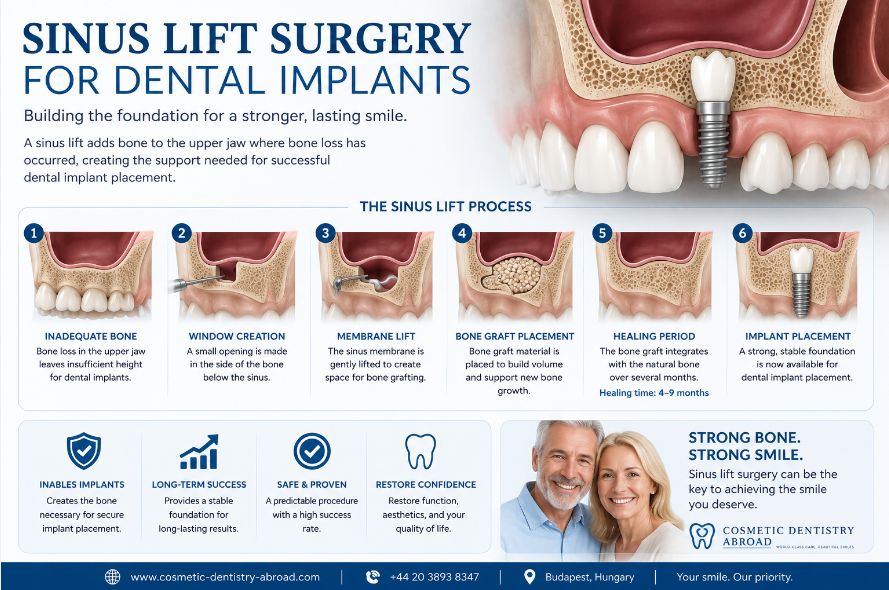
A sinus lift, also called sinus augmentation, maxillary sinus floor elevation or sinus grafting, is a dental bone-grafting procedure that creates enough bone in the upper back jaw for dental implants. It is commonly recommended when the natural bone below the maxillary sinus is too shallow to support an implant safely and predictably.
For UK patients, a sinus lift is usually part of private implant treatment rather than routine NHS dentistry. The procedure may sound intimidating because it involves the sinus, but it does not “fill the sinus” with bone. Instead, the clinician gently raises the thin lining of the sinus and places graft material underneath it, creating a new layer of bone-supporting volume above the upper jaw. After healing, this can provide a stable foundation for an implant replacing an upper premolar or molar.
This guide explains the main types of sinus lift, what happens during treatment, recovery milestones, potential risks and when implants can be placed.
Important: A sinus lift is specialist surgical treatment. Your suitability can only be confirmed after an examination, dental imaging – often a CBCT scan – and a review of your medical and sinus history.
Why Is a Sinus Lift Needed?
The maxillary sinuses are air-filled spaces located above the upper back teeth, on either side of the nose. The floor of each sinus sits close to the roots of the upper premolars and molars.
When an upper back tooth is removed or lost, the jawbone beneath it can shrink over time. At the same time, the sinus may gradually expand downwards into the space formerly occupied by tooth roots. This combination can leave too little vertical bone height for a conventional dental implant.
An implant needs enough healthy bone around it to achieve stability and integrate successfully with the jaw. If there is insufficient bone beneath the sinus, an implant may be too short, poorly positioned or at greater risk of complications. A sinus lift aims to increase bone height in this area before or alongside implant placement.
A dentist may discuss sinus augmentation where:
-
One or more upper premolars or molars are missing.
-
The teeth have been absent for a long time.
-
Gum disease, infection or extraction-related bone loss has reduced the ridge.
-
The maxillary sinus sits naturally low.
-
A previous denture or bridge has not prevented bone resorption.
-
A CBCT scan shows insufficient bone for safe implant placement.
-
You need a stable implant-supported crown, bridge or full-arch restoration.
The goal is not simply to fit an implant into any available space. Good implant planning is restoration-led: the clinician plans the final tooth position first, then determines whether sufficient bone and gum support exist in the correct three-dimensional location.
Understanding the Anatomy
A sinus lift involves three key structures:
-
The upper jawbone: The posterior maxilla is the upper jaw area that supports premolars and molars.
-
The maxillary sinus: An air-filled cavity connected to the nasal passages.
-
The Schneiderian membrane: A thin lining inside the sinus that must be elevated carefully during surgery.
The surgeon creates space between the sinus floor and the membrane. Bone-graft material is placed in this protected space, where it gradually becomes incorporated into new bone.
The procedure does not normally interfere with normal sinus function when it is appropriately planned and carried out. However, active sinus disease, substantial congestion, certain anatomical features or a history of recurrent sinusitis may alter the treatment plan. Chronic sinusitis is generally considered a relative contraindication, meaning it requires careful assessment and may need ENT input before surgery.
Types of Sinus Lift
There are two principal sinus-lift approaches. The choice depends largely on the existing bone height, the amount of extra bone needed, sinus shape, implant plan and the clinician’s assessment.
Lateral-Window Sinus Lift
The lateral-window technique is the more traditional and versatile approach. It is generally chosen when very little natural bone remains or when a larger volume of grafting is required.
The clinician accesses the sinus from the side of the upper jaw. After lifting the gum, they create a small window in the outer bone wall of the sinus. The Schneiderian membrane is carefully separated and lifted upwards, then graft material is placed underneath it. The window may be covered with a collagen membrane before the gum is sutured closed.
Because this technique gives the surgeon clear access and visibility, it can be used in more challenging cases, including where bone height is severely reduced or multiple adjacent implants are planned.
A lateral approach is often performed as a two-stage procedure:
-
Sinus grafting is completed.
-
The graft heals and matures for several months.
-
Implants are placed into the newly augmented bone.
-
After implant integration, final crowns or bridges are fitted.
In selected cases, implants can be placed at the same time as the graft. This depends on whether the remaining bone can hold the implant securely during the early healing stage.
Transcrestal Sinus Lift
The transcrestal technique is less invasive. Rather than accessing the sinus from the side, the surgeon works through the top of the jaw ridge – the same route used to prepare an implant site.
A small channel is created through the bone beneath the sinus floor. The membrane is gently elevated using specialist instruments, hydraulic pressure, bone-grafting material or, in some cases, balloon-assisted techniques. A smaller quantity of graft material is placed beneath the raised membrane.
The implant may then be placed through the same site if there is enough remaining bone to achieve good primary stability.
This approach may offer a shorter procedure and less post-operative swelling than a lateral window. However, it is not a shortcut for every case. It is generally most appropriate where there is already a reasonable amount of bone and only modest additional height is needed.
Balloon-Assisted and Other Variations
Some clinicians use a small balloon to lift the membrane gently after access has been created. The balloon is inflated gradually, then removed before graft material is placed.
Other refinements include ultrasonic instruments, hydraulic elevation and osseodensification-assisted techniques. These methods may help reduce trauma in appropriately selected cases, but the key to a successful result remains careful diagnosis, anatomy-aware planning and skilled surgery – not a particular device or marketing label.
A systematic review of minimally invasive balloon elevation reported membrane perforation as the most frequent intra-operative complication, with an average reported rate of 6.76% across included studies.
What Happens During a Sinus Lift Procedure?
A sinus lift is usually carried out under local anaesthetic. Some patients may also choose conscious sedation where it is appropriate and available. The procedure may take roughly 45 minutes to two hours, depending on whether one or both sinuses are treated, whether implants are being placed simultaneously and the complexity of the anatomy.
A typical treatment sequence includes the following.
1. Consultation and 3D Planning
Before surgery, the clinician takes a full medical and dental history. They will ask about previous sinus surgery, recurrent sinus infections, allergies, smoking, vaping, medications, diabetes, immune conditions and blood-thinning medicines.
A CBCT scan is commonly used to assess:
-
Residual bone height and width
-
Sinus size and shape
-
Sinus septa, which are internal bony partitions
-
Membrane thickness
-
Signs of inflammation or sinus disease
-
The location of nearby teeth and roots
-
The final implant position
Do not stop prescribed blood thinners, diabetes medication or other regular medication unless your GP, specialist or dental surgeon specifically advises you to do so.
2. Anaesthetic and Access
Once the local anaesthetic is working, the surgeon makes a small incision in the gum. For a lateral approach, the gum is moved aside to expose the bone on the side of the upper jaw. For a transcrestal approach, access is made through the top of the ridge.
You should not feel pain during surgery, although you may notice pressure, vibration or movement.
3. Raising the Sinus Membrane
The surgeon carefully separates the Schneiderian membrane from the sinus floor and lifts it upwards. This is the most delicate stage.
The membrane is thin and can tear. A small tear, called a membrane perforation, is the most common complication of sinus-floor elevation. It can frequently be repaired during treatment with a collagen membrane, or the clinician may alter the plan and allow the area to heal before continuing.pubmed.
A perforation does not automatically mean the treatment has failed. A systematic review found high subsequent implant survival for implants placed below repaired membranes, although the size of a perforation and the surgeon’s management remain important.
4. Placing Bone-Graft Material
Once the membrane is lifted, the surgeon places graft material into the created space. The material acts as a scaffold that supports bone formation over time.
The graft may be:
-
Your own bone, known as an autograft
-
Processed human donor bone, known as an allograft
-
Processed animal-derived mineral, often bovine xenograft
-
A synthetic bone substitute, or alloplast
-
A combination of materials, sometimes with platelet-rich fibrin
There is no single material that is right for every patient. Ask the clinic about the specific material recommended, its origin, why it has been chosen and whether it aligns with your personal, religious or ethical preferences.
5. Implant Placement: Same Day or Later
If the remaining jawbone can provide sufficient primary stability, the dental implant may be inserted during the same operation. This is more common with a transcrestal lift or where adequate native bone remains.
If little bone is available or a larger lateral graft has been placed, the surgeon may wait for the graft to heal before placing the implant. This staged approach can offer greater predictability in complex sites.
6. Closure and Review
The gum is repositioned and sutured. Stitches may dissolve, or they may be removed at a review appointment around seven to 10 days later.
Your clinic should provide written aftercare instructions, emergency contact details and an individual review plan.
Sinus Lift Recovery Timeline
Recovery has two distinct parts:
-
Short-term surgical recovery – swelling, tenderness and gum healing.
-
Long-term biological healing – the graft integrating and maturing into bone suitable for implant treatment.
These timelines are not the same.
First 24 to 72 Hours
Mild bleeding, blood-stained saliva, cheek swelling, tenderness and a feeling of pressure around the sinus or upper cheek can occur. Swelling commonly reaches its peak at around day two.
Follow the medication plan given by your clinician. Eat soft, cool or lukewarm food once numbness has gone. Keep the head elevated while resting, particularly during the first night.
First Week
Bruising may appear over the cheek or lower face. Swelling should begin to improve after its early peak. You may feel a sense of fullness in the upper jaw, and the area may be uncomfortable when chewing.
Avoid chewing directly on the surgical side. Continue careful oral hygiene as instructed. Your clinician may advise gentle rinsing with salt water or a prescribed mouthwash after the first day.
Days 7 to 14
Stitches may be removed or reviewed. Most patients feel considerably more comfortable by this stage and can return to routine activities sooner, depending on the extent of surgery and their occupation.
Addenbrooke’s Hospital states that patients commonly feel back to normal after two to three weeks, although bruising and tenderness can vary.
Weeks 3 to 8
The gum and soft tissue continue to mature. You may feel largely normal, but this does not mean the graft is fully healed. Continue attending reviews and avoid placing unnecessary pressure on the treatment area.
Months 3 to 9
The graft remodels and matures with the natural jawbone. The exact duration depends on the graft volume, graft material, residual bone, surgical technique, smoking status, healing response and whether an implant was placed at the same time.
Bupa Dental Care advises that the healing period before implant placement is commonly between three and nine months. In larger lateral-window grafts, a clinician may recommend four to nine months or longer before implant placement.
Implant and Crown Stage
Once the augmented area is judged ready, the implant can be placed if it was not inserted during the sinus lift. The implant then needs its own period of osseointegration – often several months – before the final crown or bridge is fitted.
A full sinus-lift-to-final-crown journey can therefore take six to 12 months or more. This longer timeline is not a failure; it is often the safest route to creating a stable result.
Sinus Lift Aftercare: What to Do and Avoid
The most important aftercare principle is to avoid creating pressure changes inside the sinus while the membrane and graft are healing.
Do
-
Take medicines exactly as prescribed or recommended.
-
Rest on the day of surgery.
-
Keep your head elevated when sleeping initially.
-
Eat soft foods and chew on the opposite side.
-
Brush carefully around the area as instructed.
-
Attend all review appointments.
-
Tell the clinic if you develop increasing pain, swelling or sinus symptoms.
Avoid
-
Do not blow your nose for the period advised by your surgeon.
-
If you need to sneeze, sneeze with your mouth open.
-
Do not pinch your nose and suppress a sneeze.
-
Avoid smoking and vaping, especially nicotine-containing products.
-
Avoid straws, forceful spitting and vigorous rinsing early in recovery.
-
Avoid swimming, scuba diving, flying or strenuous exercise until your clinician confirms it is safe.
-
Avoid heavy lifting and activities that increase sinus pressure during the early healing phase.
Smoking is particularly important to address. Research has associated smoking with higher risks of membrane perforation, sinusitis and wound dehiscence after sinus grafting.
Risks and Possible Complications
Sinus lift surgery has a good clinical track record when planned and performed appropriately, but no surgical procedure is risk-free.
Potential complications include:
-
Membrane perforation during surgery
-
Bleeding or bruising
-
Swelling and pain
-
Wound opening or membrane exposure
-
Graft particle loss
-
Infection
-
Acute or persistent sinus symptoms
-
Sinusitis
-
Graft failure or inadequate bone formation
-
Delayed healing
-
Need for additional grafting or delayed implant placement
Membrane perforation is the complication most frequently reported during sinus-lift surgery. Lateral sinus-floor elevation generally has more membrane-perforation and sinusitis cases than transcrestal surgery, though the appropriate technique is determined by the anatomy and grafting need, not simply by complication statistics.
Your clinician should explain their own complication-management protocol. A small membrane tear can often be patched successfully; a larger tear may mean postponing graft placement until healing is complete.
Who May Not Be Suitable?
A sinus lift may need to be deferred, modified or avoided when there is:
-
Active sinus infection or untreated sinus disease
-
Significant recurrent or chronic sinusitis requiring medical review
-
Uncontrolled diabetes
-
Poorly controlled bleeding conditions
-
Recent radiotherapy to the head or neck
-
Severe immune compromise
-
Untreated gum disease
-
Heavy smoking or inability to avoid nicotine during healing
-
Inadequate oral hygiene
-
Unresolved dental infection near the proposed surgical site
A history of sinus problems does not automatically rule out treatment. It means the surgeon must assess the risk carefully, potentially request a GP or ENT opinion, and decide whether treatment should proceed.
When to Contact Your Dental Clinic
Contact your dental surgeon promptly if you notice:
-
Pain or swelling that is worsening after the first few days
-
Persistent bleeding
-
Fever, chills or feeling generally unwell
-
Pus, foul taste or an unpleasant smell from the surgical site
-
Increasing nasal congestion, facial pressure or sinus pain
-
A sudden passage of air or liquid between your mouth and nose
-
Graft particles repeatedly coming from the nose or mouth
-
A wound that has opened or stitches that have come out early
-
Numbness that persists or worsens
Seek urgent care through NHS 111, your dentist’s emergency service or A&E if you develop trouble breathing or swallowing, rapidly spreading facial or neck swelling, severe uncontrolled bleeding or signs of a serious allergic reaction.
Questions to Ask Before a Sinus Lift
Before consenting, ask your clinician:
-
How much natural bone do I currently have?
-
Why is a sinus lift recommended instead of another implant option?
-
Which technique – lateral or transcrestal – is planned, and why?
-
Can the implant be placed at the same time?
-
What graft material will you use?
-
What are the likely healing timelines for my case?
-
Do I have any sinus findings that require ENT assessment?
-
What happens if the sinus membrane tears?
-
What temporary tooth options do I have while treatment is ongoing?
-
What is included in the total cost, including scans, grafting, implant, abutment, crown and reviews?
Final Advice
A sinus lift can make dental implants possible when upper back-jaw bone is insufficient. The procedure creates extra bone height beneath the maxillary sinus by gently lifting its membrane and placing graft material in the space below.
A smaller, transcrestal sinus lift may allow implant placement at the same visit when enough natural bone remains. A lateral-window sinus lift is generally used for more substantial bone loss and often requires a longer staged healing period before implants are placed.
Short-term recovery commonly takes one to three weeks, but graft maturation takes months. Follow the specific aftercare from your clinician, especially instructions about nose blowing, sneezing, smoking and exercise. Careful planning and patience are essential to achieving a strong, long-lasting implant foundation.
Sinus Lift FAQs
What is a sinus lift?
A sinus lift, also known as sinus augmentation or maxillary sinus floor elevation, is a bone-grafting procedure used to create more bone in the upper back jaw before dental implant placement. The surgeon gently lifts the sinus membrane and places graft material beneath it.
Why would I need a sinus lift before a dental implant?
A sinus lift may be recommended when there is not enough bone beneath the maxillary sinus to support an implant securely. This commonly happens after upper back teeth have been missing for some time, as the jawbone shrinks and the sinus can expand downwards.
Is a sinus lift the same as a bone graft?
A sinus lift is a specific type of bone graft. It creates extra bone height in the upper jaw by lifting the sinus membrane and placing graft material in the newly created space.
What are the main types of sinus lift?
The two main approaches are:
-
Lateral-window sinus lift: The surgeon accesses the sinus through a small opening in the side of the upper jaw. It is generally used where a larger amount of bone augmentation is needed.
-
Transcrestal sinus lift: The surgeon accesses the sinus through the top of the jaw ridge, usually through the implant site. It may suit cases where a smaller bone increase is required and adequate bone remains for implant stability.
Can an implant be placed at the same time as a sinus lift?
Sometimes. Same-day implant placement may be possible if there is enough existing bone to stabilise the implant. Where bone is very limited or a larger lateral graft is required, the clinician will usually allow the graft to heal first and place the implant later.
How long after a sinus lift can I have a dental implant?
The timing depends on the graft volume, type of graft material, existing bone and whether an implant was placed at the same appointment. A healing period of approximately three to nine months before implant placement is common for staged treatment.
How long does sinus lift recovery take?
Most short-term swelling, bruising and tenderness improve within one to three weeks. However, the graft underneath continues to mature for months, so feeling normal does not mean the site is ready for an implant or final crown.
Is sinus lift surgery painful?
The procedure is usually completed under local anaesthetic, so you should not feel pain during treatment. Afterwards, soreness, swelling, bruising and cheek pressure are possible. Your clinician will provide individual pain-relief advice based on your procedure and medical history.
Will a sinus lift affect my breathing?
A properly planned sinus lift should not affect normal breathing long term. Temporary pressure, mild congestion or sinus awareness can occur during healing. Contact your clinic if congestion, facial pressure, pain or nasal discharge is persistent or worsening.
Can I blow my nose after a sinus lift?
Usually, no – not during the early healing period. Blowing your nose increases pressure inside the sinus and may disturb the healing membrane or graft. Follow the exact period specified by your surgeon. If you need to sneeze, do so with your mouth open and avoid holding the sneeze in.
Can I fly after sinus lift surgery?
Avoid flying until your clinician confirms it is safe. Changes in cabin pressure can affect the sinus and the healing graft site. The recommended waiting period varies with the procedure and your recovery, so ask your surgeon before booking travel.
Can I smoke or vape after a sinus lift?
It is best to avoid smoking and vaping before and after surgery. Nicotine can impair healing, while inhalation and suction may affect the surgical area. Smoking has also been associated with higher risks of complications following sinus grafting.
What is the most common sinus lift complication?
The most common intra-operative complication is a tear in the sinus lining, called a Schneiderian membrane perforation. A small perforation can often be repaired during surgery using a collagen membrane or another protective technique.
What happens if the sinus membrane tears?
A membrane tear does not automatically mean that the procedure has failed. Your surgeon may repair a small tear and continue, adjust the grafting technique, or postpone grafting so the membrane can heal before a later procedure. The correct approach depends on the tear’s size, location and the clinical situation.
What symptoms are normal after a sinus lift?
Mild pain, cheek swelling, bruising, tenderness, slight bleeding or blood-stained saliva and a feeling of sinus pressure can be normal initially. Swelling often peaks at about two days before improving.
When should I contact my dentist after sinus lift surgery?
Contact your clinic promptly if you develop worsening pain or swelling, fever, pus, foul taste, persistent bleeding, repeated graft-particle loss, an opening in the wound, worsening sinus pressure, or a sensation of air or fluid moving between the mouth and nose.
Is sinus lift surgery safe?
Sinus lifting is a well-established implant-support procedure, but it involves surgical risks such as membrane perforation, infection, wound-opening, graft loss and sinus complications. A CBCT scan, careful medical screening, experienced surgical planning and following aftercare instructions help reduce these risks.
Sources
- Cambridge University Hospitals NHS Foundation Trust: Sinus lift procedures
- Bupa Dental Care: Aftercare for bone grafts and sinus lifts
- Systematic review: Complications of sinus floor elevation procedures
- Systematic review: Intra-operative complications during sinus floor elevation
- Schneiderian membrane perforation during sinus-floor elevation
- Systematic review and meta-analysis: Managing Schneiderian membrane perforations
- Assessment of sinus lifting in patients with chronic sinusitis
Last Updated on August 12, 2026 by LaPorta