In a Nutshell
Dental implants should usually be delayed until active gum disease and inflammation are under control. Healthy gums, adequate bone support and consistent oral hygiene are essential for predictable implant treatment.
- Before implants: bleeding gums, deep pockets, infection and active periodontitis should be treated during a periodontal clearance phase.
- Why it matters: untreated inflammation can increase the risk of poor healing, bone loss and implant failure.
- Peri-implantitis: an inflammatory infection around an existing implant that can progressively destroy the supporting bone.
- Warning signs: bleeding, swelling, bad breath, pus, pain, gum recession, deep pockets or a loose crown, bridge or implant.
- Treatment options: professional implant cleaning, improved home care, correction of bridge design or excess cement, surgical decontamination, regenerative bone procedures or implant removal in severe cases.
- Laser treatment: may support cleaning and decontamination in selected cases, but it is not a stand-alone cure or a guarantee that an implant can be saved.
- For UK patients visiting Budapest: ask for periodontal charting, X-rays or 3D scans, a written staged treatment plan, complete implant documentation, transparent pricing and a clear long-term aftercare plan.
Peri-Implantitis and Implant Preparation: Can You Have Dental Implants with Inflamed Gums?
Clinical review for UK patients considering dental implants or seeking help for inflamed, painful or failing implants in Budapest.
Dental implants can be an excellent long-term replacement for missing teeth, but they are not placed into a vacuum. Their success depends on the health of the gums, jawbone, bite, oral hygiene and wider risk profile before treatment begins. For patients with bleeding gums, deep periodontal pockets, untreated gum disease or an implant that has become sore or loose, inflammation must be taken seriously.
The central rule is straightforward: active gum disease should be controlled before implant placement wherever possible. Implants do not cure gum disease. In fact, placing implants before periodontal inflammation is stabilised can create conditions that increase the risk of infection, bone loss and implant failure. UK patients travelling to Budapest for full-mouth dental implants should therefore expect a structured, multi-stage assessment and treatment plan rather than a rushed “teeth in a day” promise.
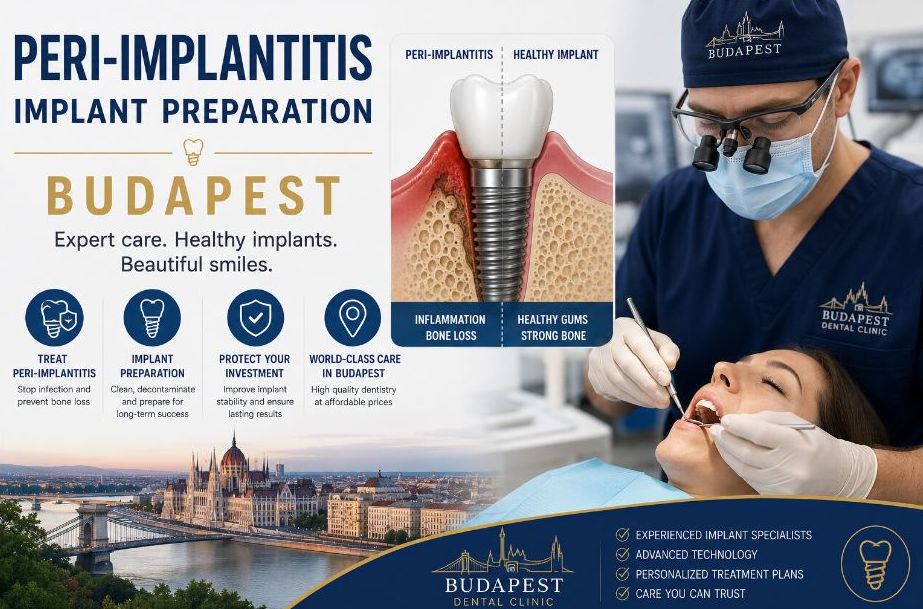
For patients who already have implants, inflammation around an implant may be peri-implant mucositis or peri-implantitis. The first is inflammation limited mainly to the soft tissues and can often be managed before irreversible damage occurs. Peri-implantitis is more serious: it involves inflammatory disease around an implant with progressive loss of the supporting bone. It needs professional assessment, detailed imaging, decontamination and sometimes surgical revision.
Can You Get Dental Implants with Inflamed Gums?
In most cases, the responsible answer is: not immediately.
Mild gum inflammation may be treatable quickly, but visibly inflamed gums, persistent bleeding, bad breath, pus, deep pockets, loose teeth or radiographic bone loss may indicate active periodontal disease. A dentist should diagnose and stabilise that disease before moving to implant surgery.
This does not mean that patients with a history of gum disease are automatically unsuitable for dental implants. Many people with previous periodontitis go on to have successful implant treatment. The difference is that the disease must first be brought under control, risk factors must be addressed and the patient must be willing to follow a long-term periodontal and implant-maintenance programme.
The European Federation of Periodontology recommends treating gingivitis and periodontitis to a stable endpoint before implant placement, alongside ongoing supportive care. Its prevention guidance describes a stable periodontal target as pockets of 4 mm or less with no bleeding on probing.
Why inflamed gums are a problem
Dental implants integrate with jawbone through a process called osseointegration. This is a biological bond, not an immunity shield. The implant and the surrounding tissues remain vulnerable to bacterial plaque accumulation and inflammation.
If harmful bacteria are already causing inflammation around natural teeth, they can colonise the tissues around a new implant. The implant’s supporting bone can then become exposed to the same inflammatory burden. Once bone loss develops around an implant, treatment becomes more complicated than treating bleeding gums around natural teeth.
Inflammation can undermine implant treatment in several ways:
- Bleeding gums and plaque build-up indicate an unhealthy bacterial environment.
- Periodontitis may have already reduced the bone available for implant support.
- Untreated periodontal pockets can act as bacterial reservoirs.
- Smoking, poorly controlled diabetes and inadequate cleaning can impair healing and raise disease risk.
- Severe gum recession or insufficient keratinised tissue can make cleaning more difficult.
- Uncontrolled teeth grinding may overload implants and restorations.
- Poorly designed bridges or full-arch prostheses can restrict access for home cleaning.
A dental implant is not simply a titanium screw placed in bone. It is part of a complete biological and mechanical system. The gums need to heal around it, the bone must maintain support and the final crown or bridge must be cleanable for years.
The Pre-Implant Periodontal Clearance Phase
A reputable implant consultation should begin with diagnosis, not surgery. For UK patients considering implant dentistry in Hungary, this stage can often be organised partly from home and completed in Budapest following an in-person assessment.
The exact protocol varies by case, but a proper periodontal clearance phase commonly includes the following elements.
Comprehensive examination and diagnostics
The dentist or periodontist should assess:
- Gum bleeding, swelling, recession and plaque accumulation
- Periodontal pocket depths around the natural teeth
- Tooth mobility, furcation involvement and bite forces
- Existing crowns, bridges, dentures and implants
- Smoking or nicotine use, diabetes and relevant medical history
- X-rays and, when required, cone beam CT imaging
- The quantity and quality of available jawbone
- Whether teeth are predictable to retain or should be removed
For patients planning full-mouth restoration, this assessment determines whether the patient needs periodontal treatment, extractions, bone preservation, grafting, temporary teeth or immediate implant placement. It also helps distinguish between a tooth that is uncomfortable but salvageable and a tooth with a poor long-term prognosis.
Professional periodontal treatment
Where active gum disease is present, treatment usually begins with professional mechanical plaque removal. This may involve detailed supra- and subgingival cleaning, scaling, root-surface instrumentation and personalised oral-hygiene instruction.
For more advanced cases, a periodontist may recommend periodontal surgery to gain access to deep areas, reduce persistent pockets or treat selected bone defects. Antibiotics are not a substitute for thorough plaque removal and should not be viewed as a routine solution to chronic gum disease.
The Scottish Dental Clinical Effectiveness Programme advises clinicians to control active periodontal disease, stabilise disease around teeth being retained and address modifiable risk factors before implant placement where possible.
Improving daily oral hygiene
Implant treatment requires a patient who can maintain the result. This is especially important for full-mouth bridges, where access around the implant-supported restoration may be more demanding than around individual natural teeth.
A tailored routine might include:
- A soft manual or electric toothbrush used twice daily
- Interdental brushes selected for the spaces around teeth or implants
- Floss, implant floss or super floss where appropriate
- A single-tuft brush for hard-to-reach areas
- Water irrigation as an adjunct where recommended by the clinician
- Regular hygienist or periodontal maintenance appointments
The exact tools depend on the restoration design. Patients should ask to be shown how to clean beneath a fixed bridge before the final prosthesis is fitted. If a bridge cannot be cleaned effectively, its design may need modification before it becomes a long-term problem.
Risk-factor management
Implant treatment is not solely a dental decision. Smoking cessation, diabetes management, plaque control and maintenance attendance can affect healing and long-term risk.
Smoking is a particularly important discussion point. It is associated with poorer periodontal health and may compromise wound healing. Patients should be transparent about cigarettes, vaping, heated tobacco and nicotine products; withholding this information can lead to a treatment plan that does not properly reflect risk.
Patients with diabetes do not automatically need to avoid implants, but blood-glucose control should be reviewed with their dentist and medical team. A clinic may ask for relevant medical information before surgery, particularly in extensive full-mouth cases.
Reassessment before implant surgery
Treatment should not automatically move from deep cleaning to implant surgery without review. Reassessment allows the clinical team to check that inflammation has reduced, oral hygiene is effective and any retained teeth are stable enough to support a long-term plan.
This is the point at which a Budapest clinic can decide whether it is appropriate to proceed with implant placement, whether additional periodontal treatment is needed, or whether the plan should be changed. A staged plan is not a delay for its own sake; it is a safeguard against avoidable implant complications.
Why Full-Mouth Implant Treatment Needs Planning
Full-mouth restoration may involve placing several implants to support a fixed bridge, such as an All-on-4 or All-on-6 style concept. These treatments can be life-changing for patients with failing teeth, loose dentures or extensive tooth loss, but they should not be marketed as a shortcut around infection.
In some cases, diseased teeth are removed, implants are placed and a provisional bridge is fitted during the same phase. This can be appropriate when the clinician has completed proper diagnostics, controlled acute infection, assessed the bone and determined that immediate loading is suitable. It is not appropriate simply because a patient has limited travel time.
A well-coordinated multi-stage treatment plan may include:
- Remote review of medical history, photographs, existing X-rays and treatment goals.
- A detailed in-person consultation in Budapest with periodontal charting and 3D imaging if needed.
- Gum-disease treatment, extractions or infection management.
- Implant placement, potentially with bone grafting or sinus treatment where indicated.
- A provisional bridge or temporary restoration during healing.
- Review of healing, bite, gum contour and hygiene access.
- Delivery of the final crown, bridge or full-arch restoration.
- A written maintenance plan for continuing care in the UK and periodic reviews in Budapest if desired.
The right number of visits cannot be decided from a price list. It depends on the health of the gums and bone, the number of teeth involved, whether grafting is needed, the chosen implant system and whether an immediate temporary bridge is clinically safe.
For UK patients, it is sensible to request a written plan that separates diagnostic fees, periodontal treatment, extractions, implant surgery, graft materials, temporary restorations, final restorations, anaesthesia, follow-up and any revision policy. Ask for copies of your scans, periodontal chart and implant details so that a UK dentist can provide ongoing care if required.
What Is Peri-Implantitis?
Peri-implantitis is inflammatory disease affecting the tissues around a dental implant, accompanied by progressive loss of the supporting bone. It is not the same as temporary tenderness after surgery, and it should not be ignored as “normal implant sensitivity”.
A related condition, peri-implant mucositis, involves inflammation around the implant without confirmed progressive bone loss. Mucositis is an important warning sign because it can often be managed before more destructive disease develops. Peri-implantitis is more challenging because the implant’s bone support has already been affected.
The European Federation of Periodontology notes that peri-implant diseases are common and that peri-implantitis can be particularly difficult to manage, which is why prevention and structured supportive care should start during implant planning and continue after the restoration is fitted.
Symptoms of infection around an implant
Peri-implantitis may progress quietly. Some patients notice little or no pain until bone loss is substantial. This is one reason routine examination and radiographs matter.
Possible signs include:
- Bleeding when brushing or probing around the implant
- Swollen, red or tender gums around an implant crown or bridge
- Persistent bad taste or bad breath
- Pus or discharge around the implant
- Gum recession that exposes metal components or makes the implant look longer
- Increasing pocket depths around the implant
- Discomfort when biting or chewing
- A change in how a bridge fits or feels
- Radiographic bone loss around the implant
- Mobility of the implant itself
Mobility is a serious warning sign. A crown or bridge can sometimes feel loose because a screw has loosened, which may be repairable. An implant body that is moving in the bone is a more urgent concern and may indicate loss of integration. Only a clinical examination and imaging can tell the difference.
Contact an implant dentist promptly if there is pus, rapidly increasing swelling, severe pain, fever, a loose implant-supported bridge or an implant that appears to move. Difficulty breathing or swallowing, spreading facial swelling or systemic illness requires urgent medical assessment.
What Causes Peri-Implantitis?
Peri-implantitis is multifactorial. Bacterial plaque is a central driver, but it often acts alongside individual risk factors and restoration-related issues.
Common contributors include:
- Previous or untreated periodontitis
- Inconsistent implant maintenance and professional cleaning
- Inadequate daily cleaning around crowns or bridges
- Smoking or nicotine exposure
- Poorly controlled diabetes
- Residual cement around an implant crown
- Excess cement, over-contoured crowns or bridge designs that trap plaque
- A prosthesis that prevents access for interdental cleaning
- Inadequate review after implant placement
- Unmanaged bite overload or bruxism
- A history of peri-implant disease around other implants
The British Society of Periodontology highlights meticulous peri-implant hygiene, risk-factor control, regular monitoring for bleeding or suppuration and radiographic review where clinically indicated. It also notes that peri-implantitis can be difficult to treat and often warrants specialist referral.
Treating Inflamed or Failing Dental Implants in Budapest
The appropriate treatment depends on disease severity, implant stability, the pattern of bone loss, implant position, prosthetic design and the patient’s ability to maintain hygiene afterwards. A clinic should not recommend laser therapy, surgery or implant removal without first completing a full assessment.
Diagnosis and treatment planning
A meaningful peri-implantitis consultation should include:
- Review of the implant system and treatment history, if available
- Evaluation of gum inflammation, bleeding, pus and plaque
- Gentle probing around the implant at multiple points
- Assessment of crown or bridge access and cleanability
- Bite and grinding assessment
- Periapical X-rays and, where required, CBCT imaging
- Evaluation of whether the implant itself is stable
- Review of systemic and behavioural risk factors
The clinician may need to remove a crown or bridge temporarily to access the implant properly, inspect for retained cement or assess the condition of screws and abutments. If the prosthesis blocks cleaning access, redesign may form part of treatment rather than an optional cosmetic upgrade.
Non-surgical peri-implant treatment
Early disease may be managed with professional mechanical debridement, improved home-care techniques and correction of factors that retain plaque. The aim is to disrupt the bacterial biofilm, reduce inflammation and establish a cleanable environment.
Non-surgical therapy may involve specialised instruments designed for implants, air polishing where clinically appropriate and detailed hygiene coaching. Adjunctive local treatments may be considered in selected situations, but they are not replacements for mechanical plaque removal and risk-factor control.
Current SDCEP guidance does not recommend routine use of adjunctive or alternative measures instead of professional mechanical plaque removal, and it does not recommend routine local or systemic antibiotics for peri-implantitis in primary care.
Surgical treatment and implant-surface decontamination
Where deeper pockets and bone loss persist, surgical access may be required. Surgery enables the clinician to visualise the defect, remove inflamed tissue, clean the implant surface and determine whether regenerative treatment is realistic.
Depending on the case, surgical treatment may include:
- Access-flap surgery to reach contaminated implant threads
- Mechanical implant-surface decontamination
- Recontouring or modification of contaminated implant surfaces in selected cases
- Bone-graft and membrane procedures for suitable contained defects
- Resective treatment to create a more maintainable contour
- Soft-tissue grafting where it may improve stability or cleaning access
- Removal of the implant if the prognosis is poor
Not every bone defect is suitable for regeneration. The anatomy of the defect, remaining bone support, implant position, surface characteristics and hygiene factors all influence the decision. An ethical consultation should explain the likely prognosis, alternatives and the possibility that removing and replacing the implant may be more predictable than repeated attempts to rescue it.
Laser treatment: useful adjunct, not a guaranteed solution
Laser decontamination is often advertised for peri-implantitis. It may be offered by clinics in Budapest as part of a wider surgical or non-surgical protocol, but patients should be cautious of claims that it can “sterilise” an implant or guarantee implant rescue.
Research suggests that lasers may have a role as adjunctive tools in selected cases, but high-quality evidence has not established a clear long-term advantage over conventional treatment. A systematic review found potential short-term benefits with adjunctive laser use but no strong evidence of long-term benefit compared with conventional care.
Similarly, a systematic review of surgical surface-decontamination protocols found no consistent evidence that one method is clearly superior, and did not show an added benefit of Er:YAG laser for treatment success.
That does not mean laser treatment is automatically inappropriate. It means the clinic should explain:
- Which laser is being proposed and why
- Whether it is used alongside mechanical cleaning and surgery
- What evidence supports its role in the individual case
- The alternatives, limitations and expected follow-up
- Whether implant removal is a more predictable option
The best question is not “Do you use laser treatment?” It is “How will you determine whether this implant is realistically salvageable, and how will you monitor the result?”
Choosing a Budapest Implant Clinic
Budapest has extensive experience in dental tourism and can be a practical option for UK patients seeking implant treatment or revision dentistry. However, the value of treatment is not defined by the lowest advertised implant price. It is defined by diagnostics, clinical judgement, materials, hygiene support, prosthetic design, documentation and continuity of care.
Before committing, ask the clinic:
- Will a periodontist or experienced implant clinician assess active gum disease before implant surgery?
- Do you provide full periodontal charting and appropriate X-rays or CBCT imaging?
- What must be completed before implants can be placed?
- Can you give a written staged plan with realistic visit timings?
- Which implant system will be used, and will you provide the implant passport, components and lot details?
- What happens if an implant is unsuitable for immediate loading?
- Is the bridge design accessible for daily cleaning?
- Who will manage peri-implantitis or complications after the patient returns to the UK?
- Will you provide copies of scans, clinical notes and aftercare instructions?
- What does the quoted price include and exclude?
A transparent clinic should welcome these questions. Patients should be wary of an all-inclusive quote that does not mention periodontal health, maintenance, imaging, temporary restorations, grafting decisions or long-term aftercare.
Frequently Asked Questions
Can I have implants if my gums bleed?
Possibly, but bleeding gums should be assessed and treated before implant placement. Bleeding commonly indicates inflammation, and proceeding without identifying the cause can increase avoidable risk.
Can periodontitis be cured before implants?
Periodontitis is usually managed as a long-term condition rather than permanently “cured”. The goal is to control inflammation, stabilise periodontal tissues and maintain the result through regular supportive care.
Can implants fail because of gum disease?
Yes. A history of periodontitis and poor plaque control can increase the risk of peri-implant disease. This is why periodontal clearance and maintenance are integral to implant treatment, not optional extras.
Is pus around a dental implant an emergency?
Pus may indicate active infection and requires prompt dental assessment. If it is accompanied by facial swelling, fever, severe pain, difficulty swallowing or breathing, seek urgent medical help.
Can a loose implant be saved?
It depends on what is loose. A crown or bridge screw may loosen and be repairable. If the implant itself is mobile in the bone, the prognosis is more serious. Examination and imaging are required before deciding whether it can be treated or must be removed.
Does laser treatment cure peri-implantitis?
No treatment can promise a cure. Laser therapy may be used as an adjunct in selected protocols, but it does not replace meticulous cleaning, professional debridement, control of risk factors, suitable prosthetic design or surgery where necessary.
How often should implants be checked?
The appropriate recall interval depends on individual risk. Patients with previous periodontitis, smoking exposure, diabetes, a history of peri-implantitis or complex full-arch bridges may need more frequent reviews. The EFP suggests supportive peri-implant care every three to four months for the first year after peri-implantitis treatment, then an individually tailored schedule.
Sources
- European Federation of Periodontology — Recommendations for the Prevention of Peri-Implant Diseases
- European Federation of Periodontology — S3 Clinical Practice Guideline for Prevention and Treatment of Peri-Implant Diseases
- Scottish Dental Clinical Effectiveness Programme — Prevention and Treatment of Periodontal Diseases in Primary Care
- British Society of Periodontology — Good Practitioner’s Guide to Periodontology
- Systematic Review: Adjunctive Use of Lasers in Peri-Implant Mucositis and Peri-Implantitis Treatment
- Systematic Review: Implant Surface Decontamination Protocols in Surgical Peri-Implantitis Treatment
Last Updated on August 15, 2026 by LaPorta