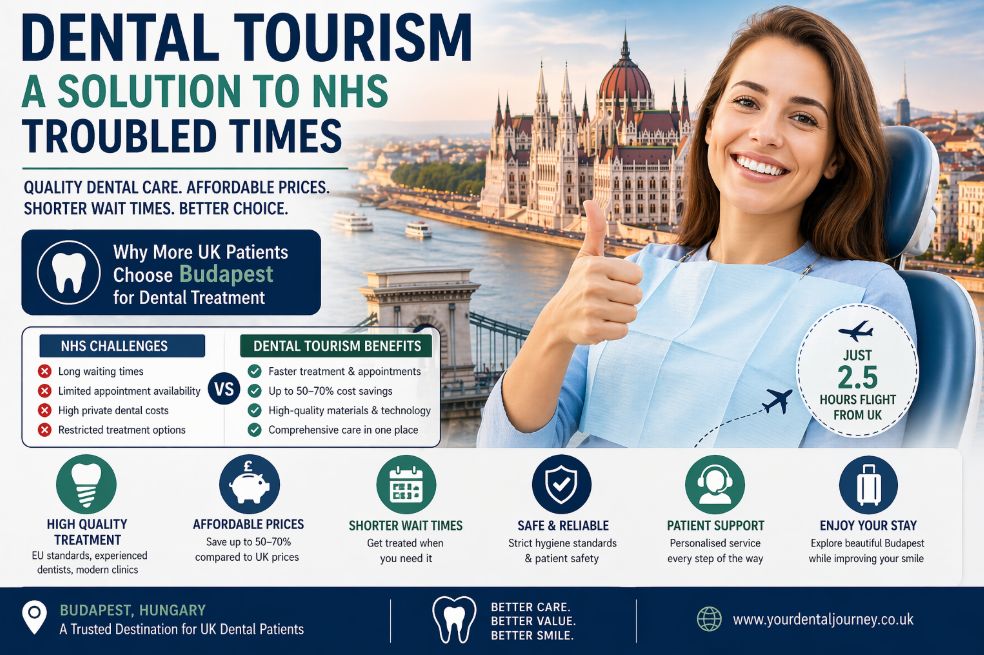
The landscape of dental care in the United Kingdom has been under sustained pressure for several years. Access to timely and affordable treatment has become increasingly difficult for many patients, with long waiting lists, limited NHS availability, and rising private costs shaping everyday decisions about oral health. In this environment, dental tourism has evolved from a niche alternative into a realistic and often necessary solution.
For UK patients facing delays or high costs at home, travelling abroad for dental treatment offers a way to regain control. It is not simply about saving money. It is about access, predictability, and the ability to receive comprehensive care without prolonged uncertainty. Among the destinations that have gained trust over time, Budapest stands out as one of the most established and reliable options.
The Current State of NHS Dentistry
To understand why dental tourism is growing, it is important to look at the broader context of NHS dentistry. The system was designed to provide accessible care, but demand has consistently outpaced capacity.
Patients across the UK frequently report difficulties in securing NHS appointments. In some areas, practices are no longer accepting new NHS patients at all. Even those already registered may face extended waiting times for routine check-ups, let alone complex procedures.
The structure of NHS dental funding also creates limitations. Treatments are grouped into bands, which can restrict the range of options available to patients. While this system helps manage costs, it can result in compromises, particularly for advanced restorative or cosmetic procedures.
For many individuals, the result is a gap between what is needed and what is accessible. This gap is where dental tourism begins to play a significant role.
The Rise of Private Dentistry and Its Challenges
As NHS access becomes more limited, patients often turn to private dentistry. While private clinics offer a broader range of treatments and shorter waiting times, the cost can be substantial.
Procedures such as dental implants, crowns, bridges, and full-mouth rehabilitation can quickly reach several thousand pounds. Even with careful budgeting, these costs are out of reach for many households.
Dental insurance provides some support, but as patients discover, it rarely covers the full cost of major treatments. Annual limits, exclusions, and partial reimbursements mean that significant out-of-pocket expenses remain.
This financial pressure, combined with the urgency of dental problems, encourages patients to explore alternatives beyond the UK.
What Dental Tourism Offers UK Patients
Dental tourism provides a different model of care. Instead of navigating long waiting lists or high domestic costs, patients can access treatment abroad where pricing structures and availability are more favourable.
At its core, dental tourism offers three key advantages: affordability, accessibility, and efficiency.
Affordability is often the first factor that attracts attention. In many European countries, dental procedures cost significantly less than in the UK. This is not due to lower standards, but rather to differences in operating costs and economic conditions.
Accessibility is equally important. Patients can often secure consultations and treatment dates within weeks rather than months. This is particularly valuable for those experiencing discomfort or functional issues.
Efficiency completes the picture. Treatment plans are typically structured to minimise the number of visits, allowing patients to complete procedures within a defined timeframe.
Why Budapest Has Become a Leading Destination
Budapest has earned a strong reputation among UK patients for its consistent approach to dental tourism. The city combines clinical expertise, modern facilities, and a patient-focused experience that aligns well with international expectations.
Hungary has a long tradition in dental education, producing highly skilled professionals who often train and work across Europe. Many dentists in Budapest have extensive experience treating international patients, particularly from the UK and Ireland.
Clinics are equipped with advanced technology, including digital imaging, 3D diagnostics, and computer-guided implant systems. This ensures that treatment planning is precise and outcomes are predictable.
Another important factor is communication. English-speaking staff are standard, and consultations are conducted with clarity and transparency. Patients receive detailed treatment plans, including costs and timelines, before committing.
Cost Savings Without Compromising Quality
One of the most compelling aspects of dental tourism is the potential for significant cost savings. In Budapest, treatments can be 50 to 70 percent less expensive than in the UK.
For example, dental implants, crowns, and bridges are commonly performed at prices that remain accessible even when travel expenses are included. This allows patients to consider treatments that might otherwise be financially prohibitive.
Importantly, lower costs do not equate to lower standards. Many clinics use internationally recognised materials and adhere to strict hygiene protocols. The focus remains on delivering durable, high-quality results.
For patients who have delayed treatment due to cost concerns, this combination of affordability and quality can be transformative.
Addressing Waiting Times and Urgency
One of the most frustrating aspects of NHS dentistry is the time it takes to access care. Dental problems rarely remain static. A minor issue can develop into a more complex condition if left untreated.
Dental tourism offers a way to bypass these delays. Patients can often schedule consultations and procedures within a short timeframe, reducing the risk of complications.
This immediacy is particularly valuable for treatments such as root canals, extractions, and implants, where timely intervention can preserve oral health and prevent further damage.
By removing the uncertainty associated with waiting lists, dental tourism provides a sense of control that many patients find reassuring.
The Patient Journey Abroad
Travelling for dental treatment may seem daunting at first, but the process is often more straightforward than expected. Clinics in Budapest are experienced in guiding international patients through each stage of the journey.
The process typically begins with an online consultation, where patients share dental records or photographs. Based on this information, the clinic provides an initial assessment and cost estimate.
Once the patient decides to proceed, appointments are scheduled to align with travel plans. Many clinics offer assistance with accommodation and airport transfers, creating a seamless experience.
During the visit, diagnostics are completed, and treatment begins according to the agreed plan. For more complex procedures, a second visit may be required after a healing period.
Follow-up care is managed through a combination of remote communication and, if necessary, return visits. This structured approach helps ensure continuity and confidence.
Safety and Standards in Dental Tourism
Safety is a central concern for any patient considering treatment abroad. Reputable clinics in Budapest operate within European regulatory frameworks, which provide a consistent standard of care.
Sterilisation protocols, professional qualifications, and clinical practices are aligned with EU expectations. Many clinics also hold international accreditations, further reinforcing their credibility.
Patients are encouraged to research clinics carefully, review qualifications, and seek detailed information before making a decision. Transparency is a key indicator of a trustworthy provider.
While no medical treatment is without risk, choosing an established destination with a strong track record significantly reduces uncertainty.
The Emotional and Practical Impact on Patients
Dental issues can affect more than just physical health. Pain, discomfort, and aesthetic concerns often have a broader impact on confidence and quality of life.
The ability to access timely and effective treatment can therefore have a meaningful emotional benefit. Patients who have struggled to find solutions within the UK often describe a sense of relief when they discover viable options abroad.
Dental tourism provides not only a clinical solution but also a pathway to restoring confidence and normalcy.
Common Misconceptions About Dental Tourism
Despite its growing popularity, dental tourism is sometimes misunderstood. One common misconception is that it is purely about low-cost treatment. In reality, most patients prioritise quality and reliability alongside affordability.
Another misconception is that follow-up care is difficult. While it requires planning, reputable clinics provide clear guidance and ongoing support to ensure continuity.
There is also a perception that travelling abroad increases risk. While this can be true if decisions are based solely on price, choosing a well-established destination like Budapest mitigates many of these concerns.
Comparing Dental Tourism to Staying in the UK
When weighing options, patients often compare the experience of staying within the UK to travelling abroad.
In the UK, the advantages include proximity and familiarity. However, these are often offset by higher costs, longer waiting times, and limited treatment options.
Dental tourism, on the other hand, requires travel but offers greater flexibility, faster access, and more comprehensive care at a lower cost.
The decision ultimately depends on individual priorities, but for many patients, the balance increasingly favours exploring international options.
The Broader Impact on UK Healthcare Choices
The rise of dental tourism reflects a broader shift in how patients approach healthcare. Access to information and international travel has made it easier to compare options and make informed decisions.
Patients are no longer limited to local providers. They can evaluate quality, cost, and convenience on a global scale.
This shift encourages higher standards across the board. As more patients consider alternatives, both domestic and international providers are motivated to improve transparency and service quality.
Looking Ahead: The Future of Dental Tourism
Dental tourism is likely to remain a significant part of the healthcare landscape. As pressures on NHS dentistry continue, patients will seek solutions that offer reliability and value.
Destinations like Budapest are well positioned to meet this demand. Their established infrastructure, experienced professionals, and patient-focused approach provide a strong foundation for continued growth.
At the same time, patients will become more discerning, prioritising quality and safety alongside cost savings. This will shape the evolution of dental tourism in the years ahead.
Final Thoughts
Dental tourism has emerged as a practical response to the challenges facing NHS dentistry. For UK patients dealing with limited access, long waiting times, and rising costs, it offers a viable and often effective alternative.
Budapest exemplifies what dental tourism can achieve when expertise, technology, and patient care are aligned. The city’s reputation is built on consistency and trust, making it a leading choice for those seeking dependable treatment abroad.
While the decision to travel for dental care requires careful consideration, it is increasingly clear that for many patients, it provides a pathway to timely, high-quality treatment that might otherwise remain out of reach.
Last Updated on April 26, 2026 by LaPorta