For many people in the UK, the year 2026 has brought a stark realization: the “National” part of the National Health Service (NHS) is increasingly difficult to access for routine dental care. With waitlists for NHS dentists stretching into years in some regions, private dental insurance has moved from being a luxury to a functional necessity for maintaining oral health.
Bupa Dental Insurance remains the titan of the UK market. But as a dental tourism expert, I often see patients who are caught in a “coverage gap”—people who pay for insurance monthly but still find themselves facing £5,000 bills for implants or full-arch restorations.
Is Bupa Dental Insurance actually worth it in 2026? Does it cover the high-end cosmetic work you actually want, or is it merely a safety net for check-ups and extractions? This 3,500-word deep dive examines the costs, the “hidden” exclusions, and the critical role insurance plays in the “Budapest vs. Harley Street” debate.
1. The 2026 Bupa Dental Landscape: An Overview
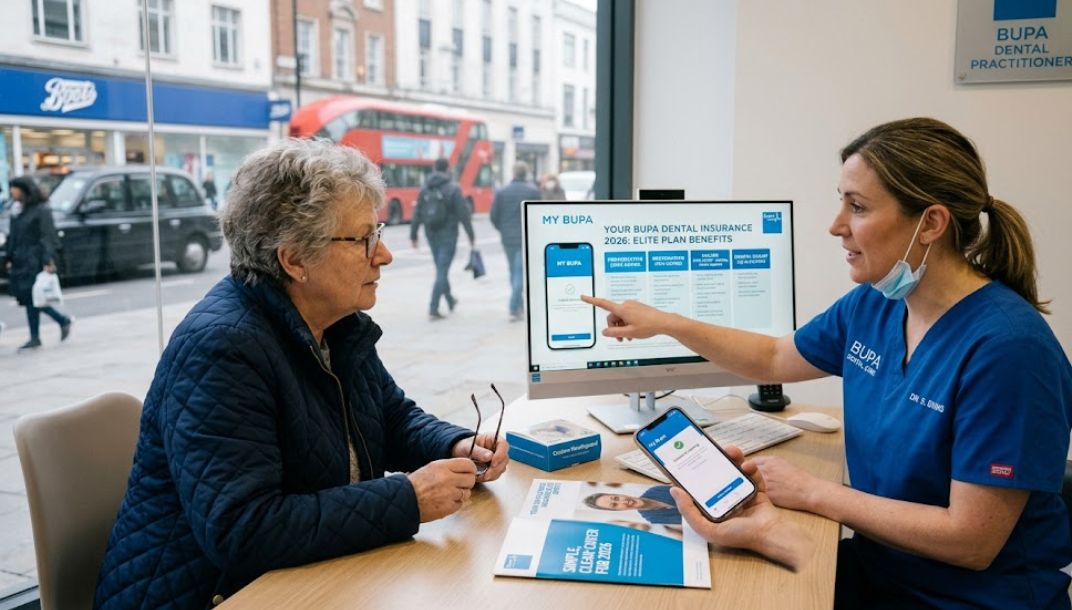
In 2026, Bupa doesn’t just sell insurance; they are the provider. Only Bupa connects dental insurance directly with its own massive network of over 400 Bupa Dental Care practices across the UK.
This vertical integration is their “Secret Sauce.” If you have Bupa insurance and visit a Bupa clinic, you get access to Instant Claiming. You don’t pay the full bill and wait weeks for a check; the clinic processes the claim at the reception desk, and you only pay the remaining balance (if any).
The Three Pillars of Bupa Dental
Bupa generally categorizes its dental offerings into three tiers for 2026:
-
NHS Cash Plans: Designed to cover the standard NHS Band charges (Bands 1, 2, and 3).
-
Private Insurance (Standard to Premium): Designed to pay a percentage of private dental fees.
-
Bupa Smile Plan: A subscription-based maintenance plan (not insurance, but a way to spread costs).
2. Bupa Dental Insurance Costs in 2026
How much will you actually pay for Bupa dental cover this year? Like all insurance, the “sticker price” depends on your age, location, and the level of “major” work you want covered.
Monthly Premium Estimates
-
Bupa Dental Direct (Basic): £12 – £18 per month. This is primarily for those who use an NHS dentist but want to claim back the £28.50 to £335.00 charges.
-
Bupa Dental Choice (Mid-Tier): £25 – £35 per month. This is for patients who prefer private dentistry. It typically covers 100% of check-ups and 50–70% of restorative work.
-
Bupa Dental Elite (Premium): £45 – £60 per month. This is the “peace of mind” tier. It offers higher annual limits (often up to £1,500 – £2,500) and covers a larger portion of crowns, bridges, and occasionally dental implants.
Expert Insight: In 2026, many Bupa policies now include a “Bupa Dental Care Discount.” If you use a Bupa-owned practice, you often receive 10% to 20% off your private treatment bill, even if you’ve already reached your annual insurance limit.
3. What is Covered? (The Small Print Decoded)
Understanding “Levels of Cover” is where most UK patients get frustrated. Let’s break down what Bupa actually pays for in 2026.
Routine and Preventative (100% Cover)
Almost all Bupa plans cover 100% of your routine check-ups, X-rays, and hygiene appointments (usually limited to two per year). In a climate where a private hygiene session in London can cost £85, this alone can pay for the insurance.
Restorative Care (50% – 80% Cover)
This includes the “un-glamorous” side of dentistry:
-
Fillings: Amalgam is usually covered fully; white composite fillings may require a top-up.
-
Extractions: Standard and surgical extractions.
-
Root Canal Treatment: Often subject to a “per tooth” limit.
Major Restorative (The “Big Stuff”)
This is where you need to check your specific policy. Bupa Dental Elite plans in 2026 provide significant contributions toward:
-
Crowns & Bridges: Usually after a 12-month “waiting period.”
-
Dentures: Replacement of existing dentures (often with a 5-year replacement rule).
-
Dental Implants: WARNING. Most standard Bupa policies exclude dental implants unless they are required following an accident. However, high-end “Premium” or “Corporate” plans may offer a contribution (e.g., £500 – £1,000 per year), which is a drop in the bucket for a £2,500 UK implant.
4. The Waiting Game: Critical Waiting Periods
Bupa doesn’t let you sign up on Monday and get a £1,000 crown on Tuesday. In 2026, the waiting periods are strictly enforced:
-
0 Months: Routine check-ups and emergencies.
-
4 – 6 Months: Routine restorative work (fillings, extractions).
-
12 Months: Major restorative work (crowns, bridges, dentures).
Why this matters: If you know you need a full-mouth restoration, you cannot use insurance as a “coupon.” You must plan your oral health 12 months in advance to utilize the benefits.
5. Bupa and Dental Tourism: The Overseas Connection
As a dental tourism expert, I am frequently asked: “Can I use my Bupa insurance in Budapest?”
The answer in 2026 is “Yes, but with caveats.”
Worldwide Cover
Most Bupa dental insurance policies include a “Worldwide Emergency” or “Worldwide Benefit” clause. If you have an emergency while on holiday in Hungary or Turkey, Bupa will reimburse you up to a certain limit (usually £500 – £1,000).
Planned Treatment Abroad
For planned treatment (like a pre-booked implant surgery in Budapest), Bupa will typically reimburse you according to their “UK Equivalent Rate.” * Example: If your Bupa plan pays £300 toward a crown in the UK, they will likely pay £300 toward your crown in Budapest. Since the crown in Budapest only costs £400, your out-of-pocket expense is tiny.
However, you must pay for the treatment abroad yourself, get a detailed medical invoice in English (or translated), and submit it via the My Bupa app for reimbursement.
6. The “Accident & Emergency” Safety Net
One of the strongest features of Bupa Dental Insurance in 2026 is its Dental Injury cover.
If you trip and knock out your front teeth, Bupa’s “Injury” benefit is much more generous than its “Restorative” benefit. In many cases, Bupa will cover the full cost of dental implants (up to a high ceiling like £5,000 – £10,000) if the loss was due to an external blow to the mouth.
Important: This does not cover injuries sustained while playing contact sports (rugby, boxing) unless you were wearing a custom-fitted mouthguard.
7. Bupa vs. Denplan: Which is Better for 2026?
UK patients often confuse Bupa Insurance with Denplan.
-
Denplan is a capitation scheme. You pay your dentist directly a monthly fee based on your “risk.” If you have bad teeth, you pay more. It covers almost all your work with that specific dentist.
-
Bupa is insurance. You pay Bupa. You can go to any dentist (though you get perks at Bupa practices). You are covered for “new” problems and emergencies.
The Expert Verdict: If you have a dentist you love and your teeth are in “maintenance mode,” Denplan is often better. If you want flexibility, worldwide cover, and the ability to claim back costs from different specialists, Bupa is the superior choice.
8. Exclusions: What Bupa Will Not Pay For
To avoid “Claim Refusal Frustration,” you must know what Bupa 2026 avoids:
-
Pre-existing Conditions: If your dentist noted you needed a crown before you took out the policy, Bupa will not pay for that specific crown.
-
Cosmetic Dentistry: Teeth whitening, veneers, and “smile makeovers” are purely elective. Bupa views these as “beauty” treatments, not “health” treatments.
-
Orthodontics for Adults: While children may have some cover, adult braces (Invisalign) are almost always excluded.
9. Is Bupa Dental Insurance Worth It?
Let’s look at the math for a typical UK patient in 2026.
The Scenario: * Monthly Cost: £30 (£360 per year).
-
Annual Activity: 2 Check-ups, 2 Hygiene visits, 1 Filling.
-
Private Cost without Insurance: £450.
-
Bupa Reimbursement: £450.
-
Net Benefit: You saved £90 and have “catastrophic” cover for accidents.
The Verdict: Bupa Dental Insurance is a “No-Brainer” for those who utilize private hygienists and check-ups. It essentially prepays your maintenance and gives you a discount on the big stuff. However, it is not a replacement for a “Sinking Fund” if you need major £10,000 reconstructive work.
10. Final Steps: How to Claim
In 2026, Bupa has gone fully digital.
-
Download the My Bupa App.
-
Take a photo of your receipt.
-
Upload and wait. Most claims are settled within 3 to 5 working days.
Summary for UK Patients:
Bupa Dental Insurance provides the most robust private network in the UK. While it won’t pay for your “Turkey Teeth” veneer makeover, it is the most reliable way to ensure you can actually get an appointment in a 2026 UK dental market that is increasingly turning its back on the NHS.
Last Updated on April 27, 2026 by LaPorta