If you are a UK patient facing the loss of one or more teeth, you’ve likely felt the weight of a difficult choice. On one side, the National Health Service (NHS) represents a safe, familiar haven, but its dental implant availability has become legendary for being “virtually impossible.” On the other side, the glossy brochures of Budapest and Turkey promise Hollywood results at a fraction of the price.
In 2026, the landscape of dental restoration has shifted. Costs in the UK have risen, while clinics abroad have invested in even more advanced robotic surgery and digital planning. As a dental tourism expert, I have reviewed thousands of patient journeys. This guide is designed to cut through the marketing noise and give you the cold, hard facts about where—and how—to replace your teeth this year.
1. The NHS “Unicorn”: Can You Actually Get Implants for Free?
Let’s address the most common question first: “Can I get dental implants on the NHS?”
In 2026, the answer for 99% of the UK population remains a firm no. The NHS does not view dental implants as a standard cosmetic or restorative solution for general tooth loss caused by decay, gum disease, or ageing. Instead, the NHS prioritises “clinically necessary” alternatives like dentures or bridges.
The Strict Eligibility Criteria
NHS-funded dental implants are reserved for “exceptional circumstances.” You might be considered only if you fall into these categories:
-
Severe Trauma: Major facial injuries (e.g., from a car accident) where traditional dentures cannot be supported.
-
Cancer Treatment: Reconstruction following surgery for head or neck cancer.
-
Congenital Defects: Being born with a missing jawbone segment or a genetic condition like hypodontia (missing multiple adult teeth).
-
Complete Denture Failure: Only in very rare cases where a patient has a total physical inability to wear dentures due to an abnormally shaped jaw.
If you do qualify, the work is usually performed in a hospital setting by a consultant, rather than at your local high-street dentist. Even then, the waiting times can exceed 18–24 months, and you will still likely pay the standard Band 3 charge (approx. £335 in 2026) unless you are exempt.
2. The NHS Alternatives: What Happens if You Stay?
If you don’t meet the “exceptional” criteria, the NHS will offer you two main alternatives to replace your missing teeth. While these are functional, they come with long-term trade-offs.
Traditional Dentures (The Band 3 Solution)
Dentures are the primary NHS answer to tooth loss.
-
The Good: They are the most affordable option and require no surgery.
-
The Bad: In 2026, NHS dentures are still typically made of standard acrylic. They don’t prevent jawbone atrophy (bone loss). Over time, as your jawbone shrinks, the dentures will become loose, requiring frequent “relining” or replacement.
Dental Bridges (The Fixed Solution)
A bridge “bridges” the gap using the healthy teeth on either side as anchors.
-
The Good: It’s fixed in place and feels much more natural than a denture.
-
The Bad: To fit a bridge, the dentist must “shave down” the healthy enamel of the neighbouring teeth to fit crowns over them. This can weaken healthy teeth and make them more susceptible to decay in the future.
3. Budapest: The “Old Guard” of Dental Tourism
For over 20 years, Budapest has been the “Dental Capital of Europe” for UK patients. In 2026, it remains the top choice for those who value academic clinical excellence and EU-regulated safety.
Why Budapest?
-
Specialisation: Hungarian dental education is world-renowned. Many clinics in Budapest are “implant centres,” meaning they don’t just do general dentistry—they specialise in complex oral surgery.
-
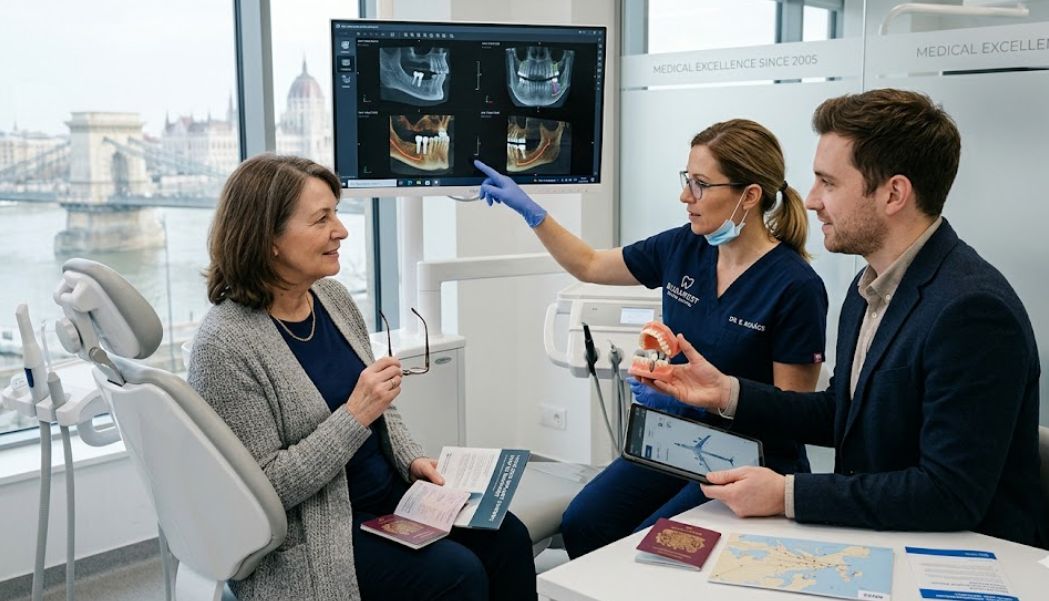
The “Implant Passport”: Budapest clinics are meticulous about documentation. You will receive a serialised “passport” for your implants (usually top brands like Straumann or Nobel Biocare), ensuring any UK dentist can service them later.
-
Cost: A single implant in Budapest typically costs between £800 and £1,100, compared to £2,500+ privately in the UK.
The Budapest Vibe
The process is often clinical and efficient. You fly in, stay in a partner hotel, and spend your days between the clinic and the beautiful historic spas. It feels more like a medical trip than a holiday.
4. Turkey: The New “Superpower” of All-Inclusive Care
While Hungary was the pioneer, Turkey (specifically Istanbul and Antalya) has taken over as the volume leader in 2026. Turkish clinics have mastered the “VIP Experience.”
Why Turkey?
-
Aggressive Pricing: You can find single implants in Turkey for as low as £400 to £600.
-
All-Inclusive Packages: Most Turkish clinics bundle your treatment with 5-star hotel stays, VIP airport transfers, and even a dedicated personal coordinator who stays with you throughout the day.
-
Speed: Turkey is the home of the “Same Day Smile.” Their labs are incredibly fast, often turning around full sets of zirconia crowns in just 3–5 days.
The Risk Factor
The meteoric rise of “Turkey Teeth” has come with a warning. Because the market is so competitive, some clinics prioritise speed over biological healing. In 2026, the expert advice is to avoid “Same Day” permanent loading unless it is a specific All-on-4 case. Always ensure you have a “healing period” of 3 months between the implant surgery and the final crown fitting.
5. Comparative Cost Review: 2026 Estimates
To give you a clear picture of the financial landscape, here is how the costs currently break down for UK residents.
| Procedure | UK Private (Average) | Budapest (Average) | Turkey (Average) |
| Single Implant + Crown | £2,500 – £4,000 | £850 – £1,100 | £450 – £750 |
| All-on-4 (Full Arch) | £14,000 – £18,000 | £5,500 – £7,000 | £3,500 – £5,500 |
| Zirconia Crown (Single) | £800 – £1,200 | £350 – £500 | £180 – £300 |
| Sinus Lift / Bone Graft | £1,500 – £2,500 | £500 – £700 | £300 – £500 |
6. The “Hidden” Costs of Going Abroad
As an expert, I must remind you that the “sticker price” isn’t the final price. To do dental tourism correctly in 2026, you must factor in:
-
Multiple Trips: Most implant procedures require two trips. Trip 1 for the surgery (3 days) and Trip 2 for the final fitting (7 days) after the bone has healed.
-
Maintenance: Implants need an annual professional clean. While you can do this in the UK, many international guarantees are only valid if you return to the original clinic for an annual check-up.
-
Corrective Work: If an implant fails (which happens in about 2-3% of cases regardless of where you go), the cost of flying back can eat into your savings.
[Image comparing dental bone grafting vs sinus lift procedures]
7. Expert Verdict: Where Should You Go?
The “best” option depends entirely on your personal priorities.
-
Choose the NHS if: You have a major medical trauma or cancer history, and you have the patience to wait for hospital-grade care.
-
Choose a UK Private Dentist if: You have a complex medical history (like uncontrolled diabetes or heavy smoking) and need a local surgeon who can monitor you weekly.
-
Choose Budapest if: You want the highest possible European clinical standards, EU-regulated materials, and a transparent, medically-focused journey.
-
Choose Turkey if: You are on a stricter budget, want a “luxury” experience, and are looking for a full-mouth restoration (All-on-4/6) where the package deals provide the most value.
Final Thoughts for 2026
The era of “one size fits all” dentistry is over. Whether you are navigating the hurdles of the NHS or the terminals of Heathrow on your way to Hungary, the key is information. Never settle for the cheapest quote without asking about the implant brand, the surgeon’s credentials, and the aftercare policy.
Your smile is an investment that should last 25 years or more. Don’t let a 25-minute decision ruin it.
Are you leaning towards the safety of a UK clinic, or does the modern efficiency of Budapest or Turkey sound like the right fit for your budget? Let’s explore your specific case.
Last Updated on April 27, 2026 by LaPorta